Research trip: Tunisia, January 2026

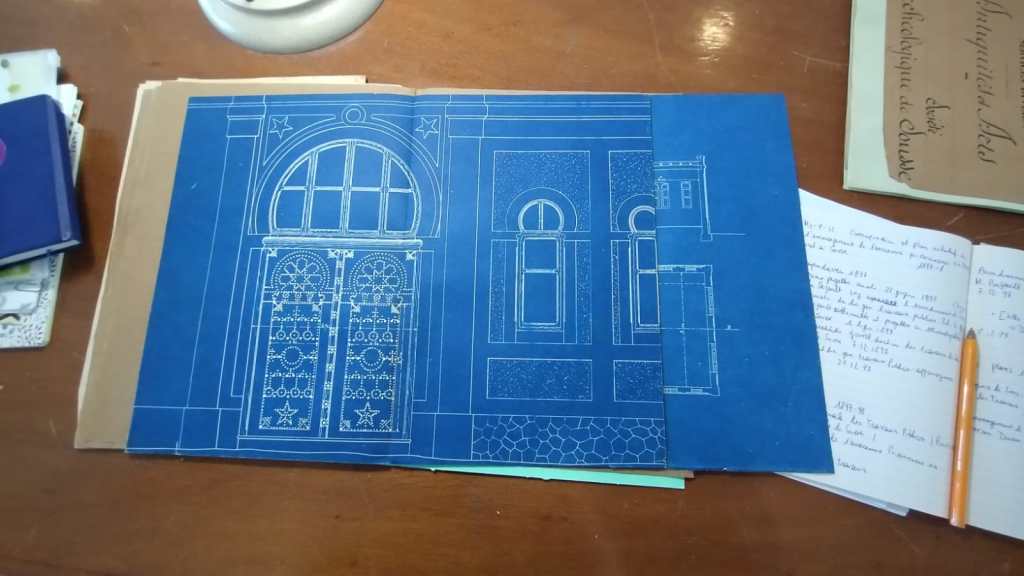
In the last month I have been able to travel to Tunisia to collect materials regarding the discovery of the Tunisian catacombs. The research included a study period at the National Archives of Tunis and a trip to Sousse.

The National Archives of Tunisia were established in 1955 with Tunisian internal autonomy and restructured in various stages starting in 1967, until they were organised as we know them today between 1988 and the 1990s. They mainly preserve materials relating to the management of affairs concerning the Tunisian population and territory since 1857, and then in particular under the French protectorate and the period of independence. It is structured in various series divided by theme and geographical sub-series (see https://www.archives.nat.tn).

The materials preserved here are mainly administrative, so information can be retrieved on the catacombs of Sousse, especially regarding their management over time. The series of interest are series E (relating to the activities of institutions and administrative services, in particular the Directorate of Antiquities and Arts), series M3 (Directorate of Public Works) and series M6 (Directorate of Public Education).

It was possible to find material on the establishment of the Museum of Sousse, the discovery of the catacombs and their classification as a monument of national interest.

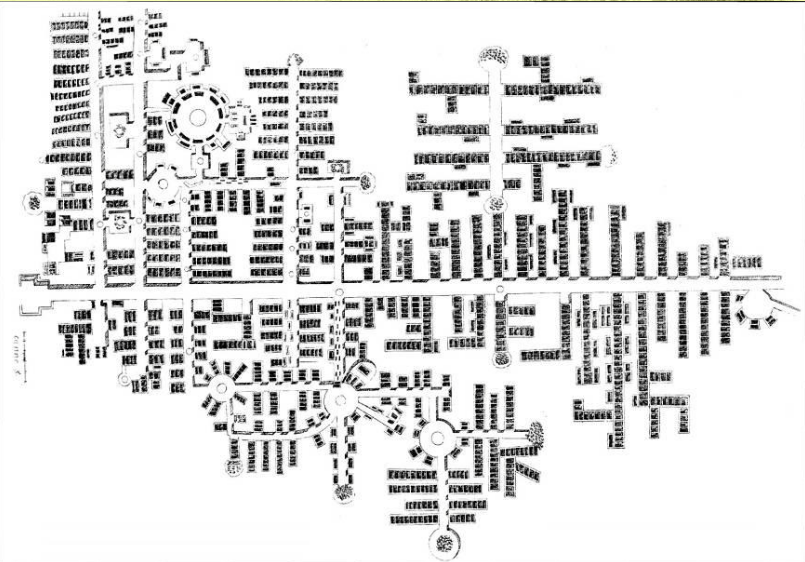
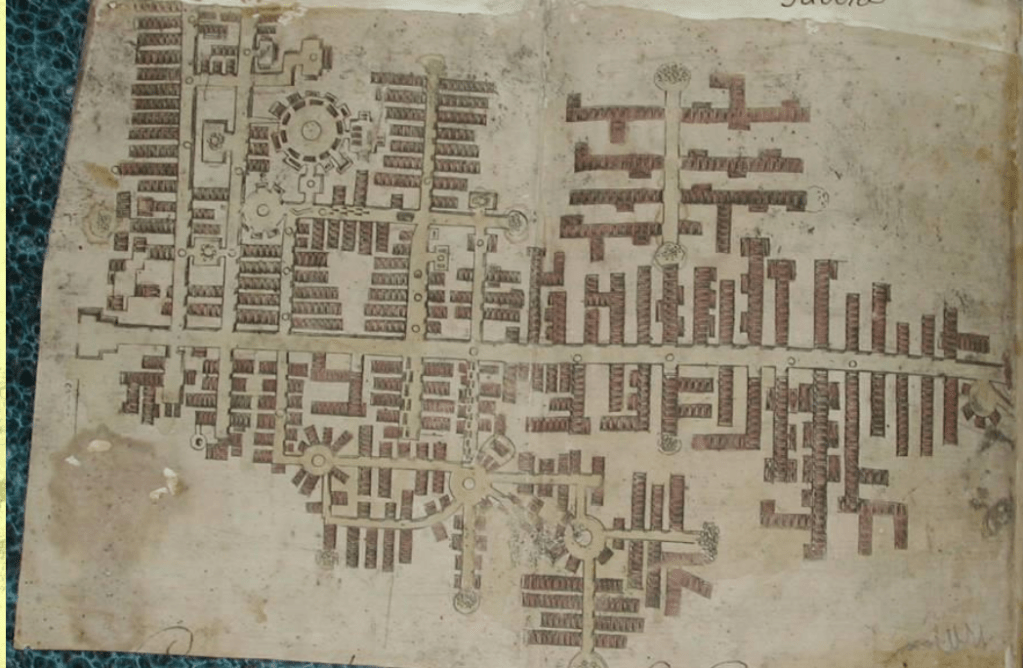
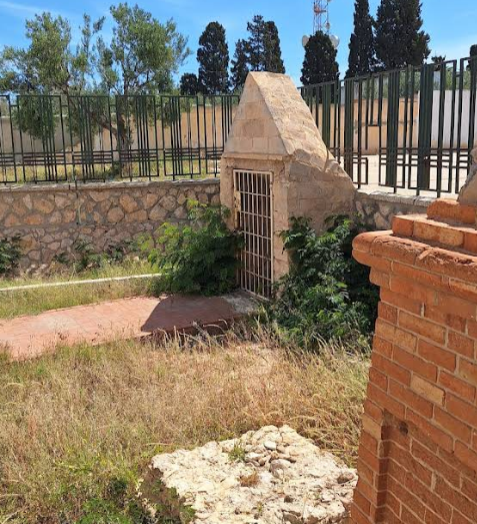
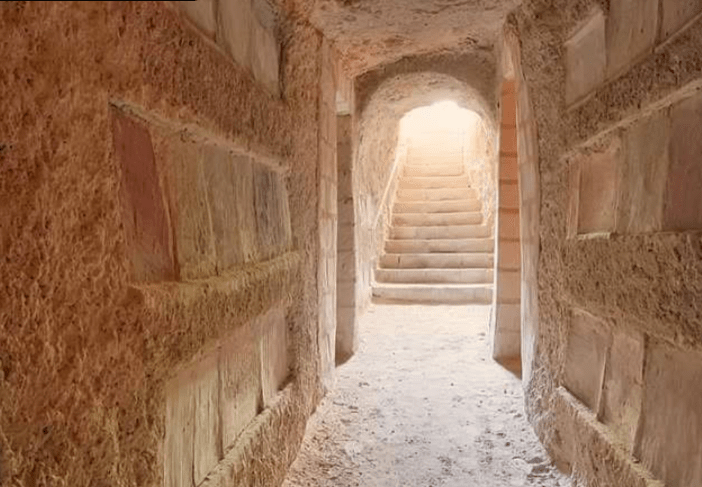
The catacombs of Sousse are underground burial structures dating back to between the 3rd and 6th centuries in the suburbs of the Roman city of Hardumetum. There are five different complexes of varying sizes, consisting of tunnels and burial chambers, in which the main tombs are either niches (closed with funerary inscriptions) or arcosolia or tombs (formae) with floors (mostly covered with decorated mosaics). From an archaeological point of view, the catacombs have yielded canonical material such as epigraphs, mosaics and oil lamps typical of North African production.
They are currently closed to the public.

The first discoveries of the catacomb structures in 1888 were accidental, made by French colonel Vincent. Excavations, however, only began in 1903 by Father Augustin Leynaud. Leynaud, together with Carton and with the collaboration of the Societé Archeologique de Sousse, carried out excavations of the cemetery complexes of Sousse for over twenty years, publishing the only archaeological volumes relating to these campaigns, with a wealth of information on the finds and structures.


The Archaeology Museum of Sousse opened in 1897, during the French mandate in Tunisia in 1881, in a building near the commercial port. It was established to host the findings of the massive archaeological campaigns in the city and the surrounding areas. During 1942 and 1943, the city of Sousse was the target of intensive air strikes aimed at the port and its immediate surroundings. The artifacts that survived the war and those discovered successively in the wider region of Sahel were grouped together and exhibited in the fortress of the Kasbah. This new museum opened to visitors in 1951 thanks to the initiative and scientific work of French archaeologists, especially Louis Foucher. It was therefore closed for renovation in 2007 by the National Heritage Institute of Tunisia and reopened in 2012. It is now one of the most important archaeological museums in Tunisia, hosted in its impressive and restored Kasbah, where artifacts (and especially mosaics) are exhibited in a mostly chronological way.

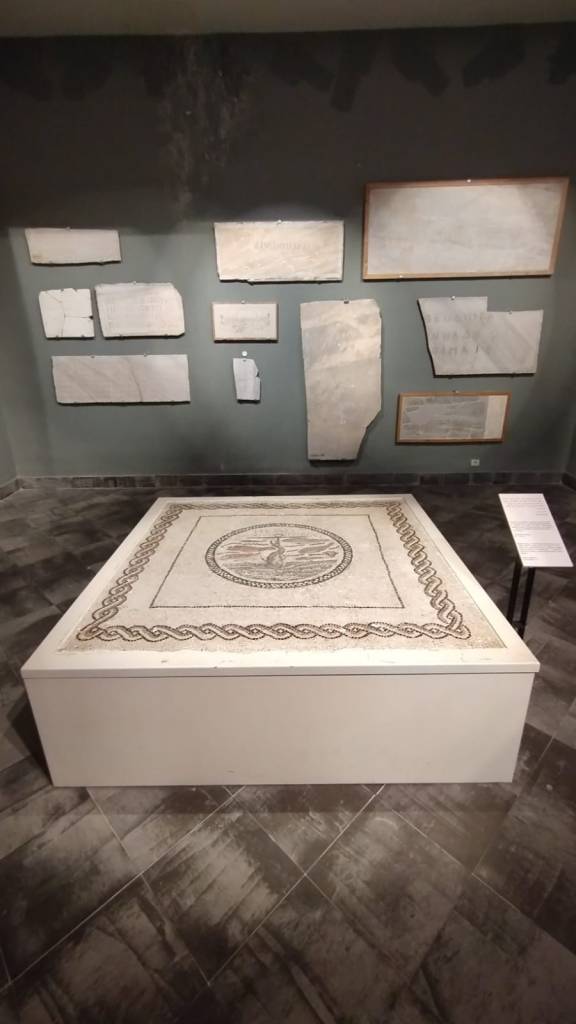
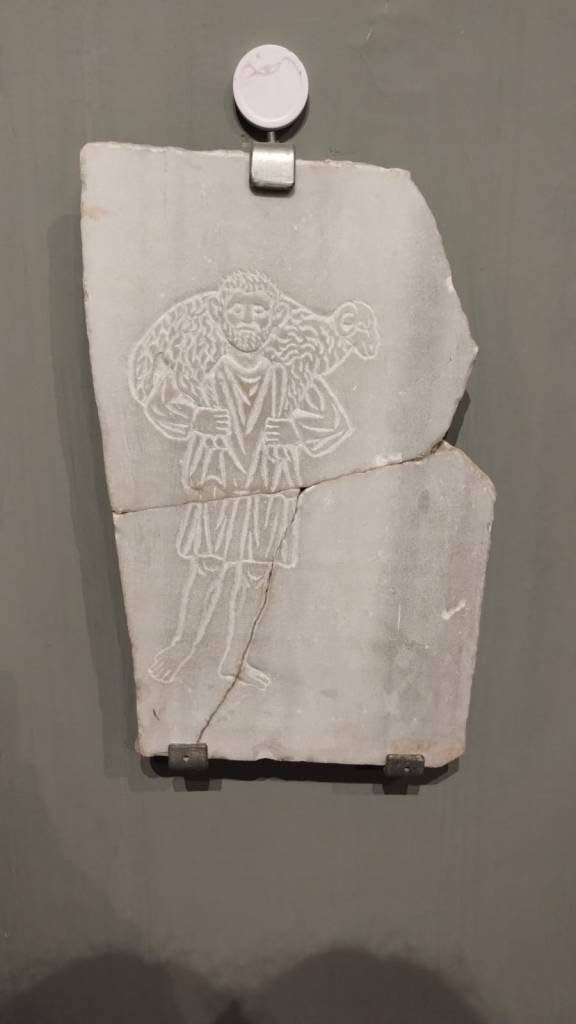
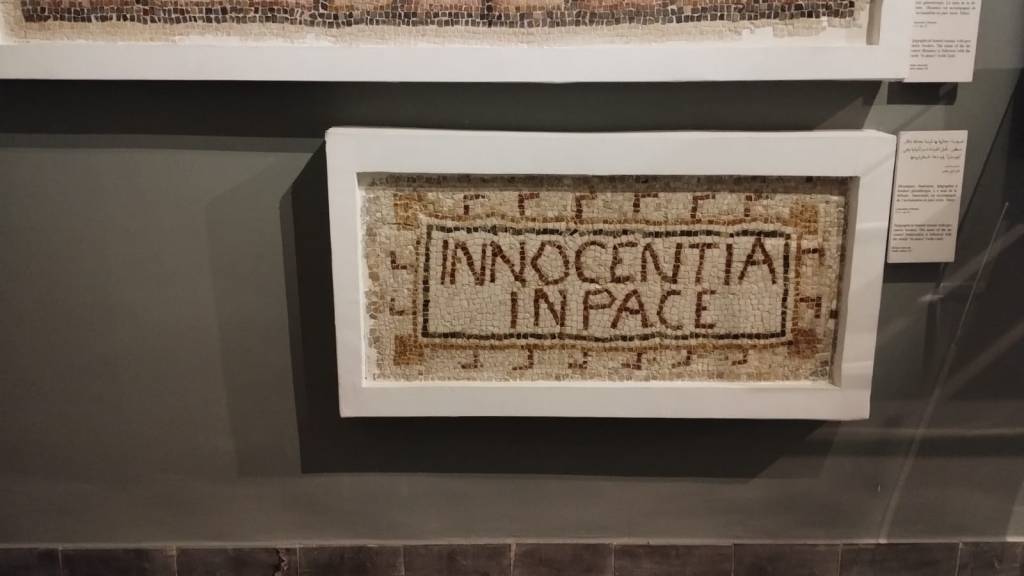
One of the side rooms of the museum is dedicated to Christian artifacts, and almost all of those on display come from the catacombs of Sousse, in particular the Catacomb of the Good Shepherd, the Catacomb of Hermes and the Catacomb of Severus. This is a very partial exhibition of all the finds, but it covers practically all the main types of materials: there are, of course, the main funerary mosaics found at these sites, many oil lamps (with clearly Christian iconography but of unspecified origin), and some funerary inscriptions of great importance. Today, this room is the only exhibition of material originating exclusively from the catacombs in Tunisia.


Additional information:
https://www.patrimoinedetunisie.com.tn/musees/musee-archeologique-de-sousse/apercu/

https://www.inp2020.tn/2020/01/02/musee-archeologique-de-sousse/#more-689

A.F. Leunayd, Les catacombes africaines : Sousse-Hadrumète, Maison-Carrée : Imprimerie polyglotte africaine, 1937

Past, present and future of the museum of the Roman-Christian Necropolis of Tarragona

Over the past two months, news that Tarragona will receive seven millions for the restoration of the Early Christian Necropolis museum has brought this unique museum back into the local and national news. More on the news here.

It seems a happy coincidence that this news arrived precisely during the period of investigation I am conducting on this museum. It is not only the most interesting case of a museum of early Christian antiquities in Spain, but also one of the very few surviving examples of 1920s museum settings in Europe.

The museum was created and managed by the discoverer of the necropolis of Tarragona, Monsignor Joan Serra i Vilarò. Its contruction begun in late 1929 with the approval of the national government, and it was inaugurated in October 1930. It is a building in neo-classical style, built above part of the necropolis. The innovation of this museum lied in its being on-site, keeping the find close to the excavation site and preventing them from being taken to the national main museums, far from Tarragona. In this, as well as in the continuous publication of excavation results, Serra i Vilaró was a true pioneer.

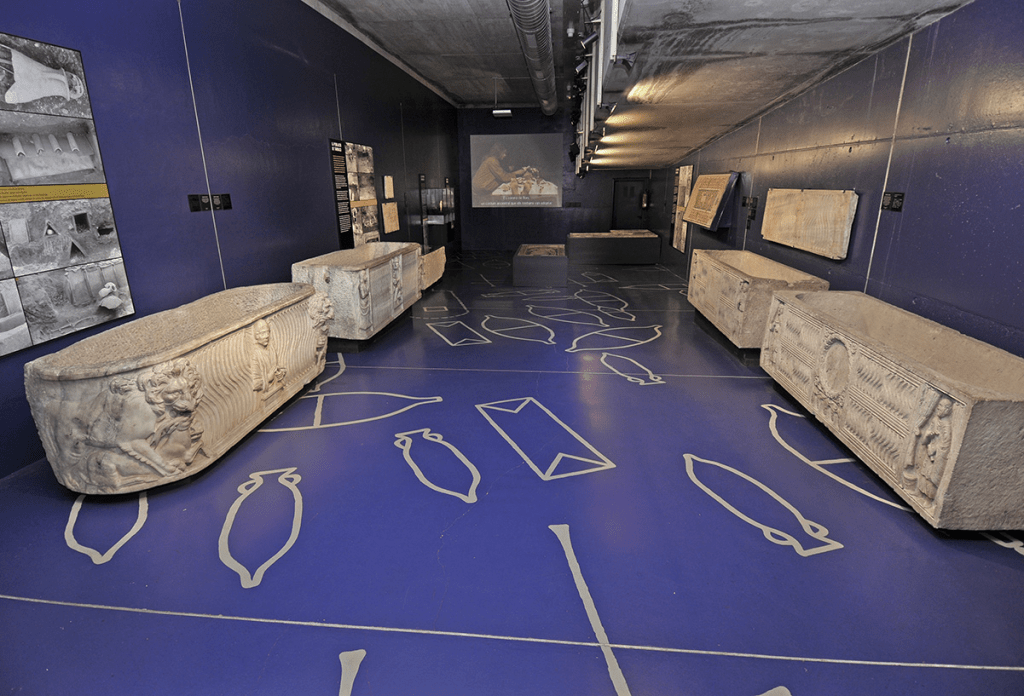
The collection was displayed in three rooms. In the basement, a part of the necropolis was visible, then amphorae, some sarcophagi and other materials were arranged. On the first floor, a long corridor surrounded the central hall. The corridor was used as a gallery and the main decorated sarcophagi and some of the funerary mosaics found in the necropolis were displayed there.

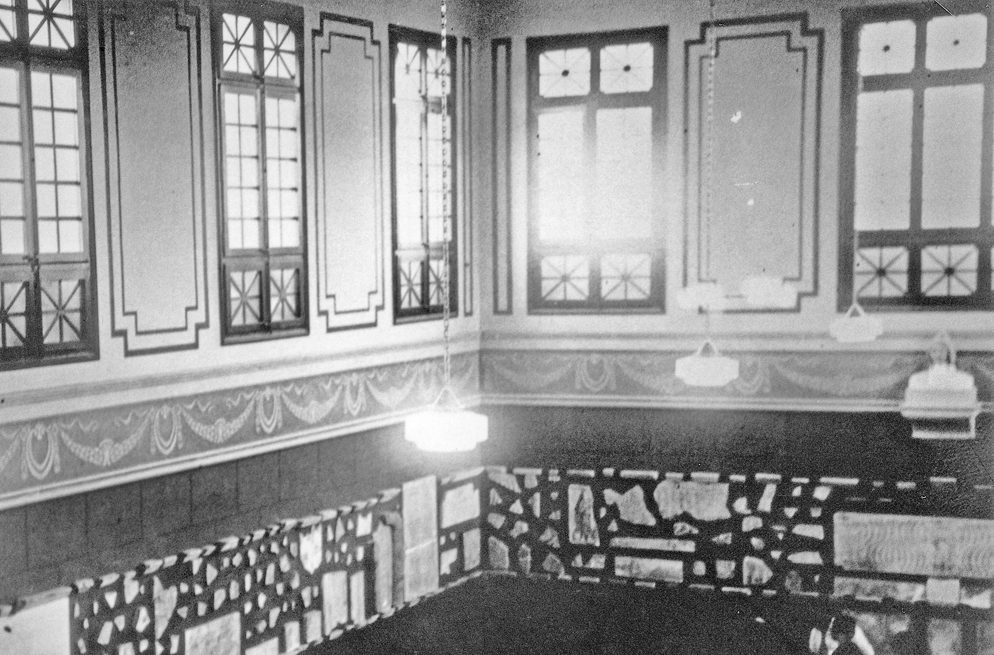
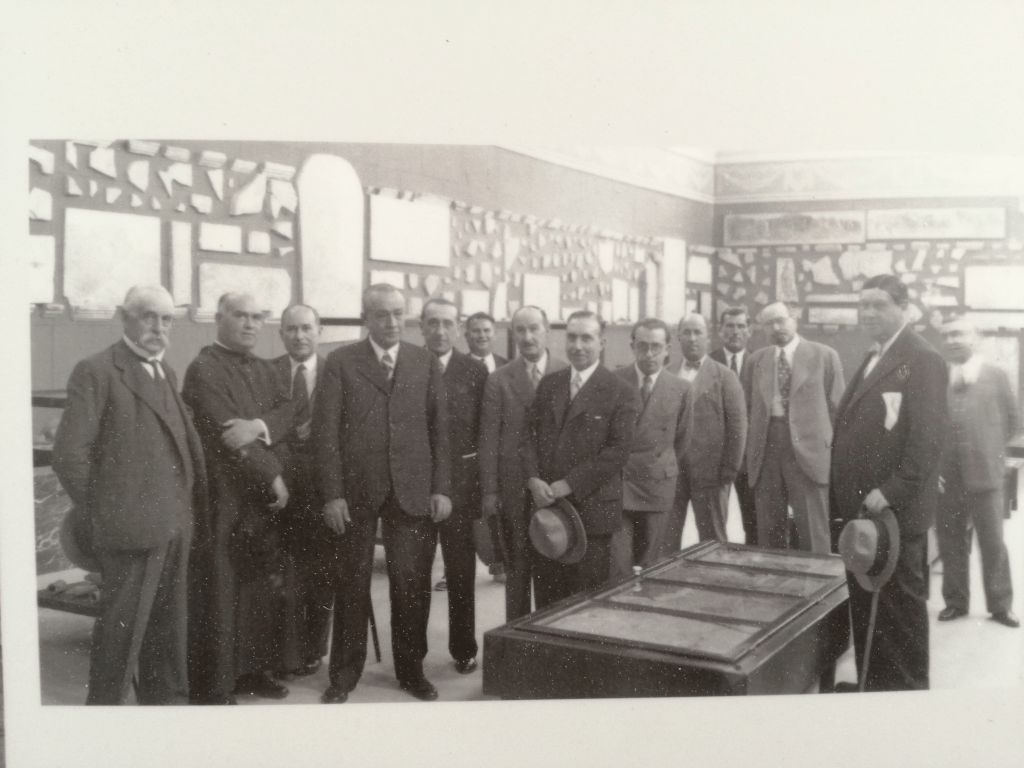
The central hall is certainly the most interesting. Its layout is very reminiscent of the Roman museums of the time (in particular the lapidary galleries of the Vatican Museums): all the epigraphs found in the necropolis, including the smallest fragments, are arranged on the central part of the walls. In the centre of the room, several wooden showcases held the smaller finds from the tombs.

The museum and its layout were very similar to many other archaeological museums in the Mediterranean (an example can be seen here). But its uniqueness today lies in the fact that it has never been modified: the life of the museum after the turmoil of the civil war of 1938-39 (in which the museum was emptied and the collection temporary evacuated) was very quiet and the layout was never radically changed. In the last 30 years, on the contrary, it has been closed and abandoned, despite the modernisation of the necropolis. For many years now, public access has been prohibited for security reasons.
However, this has allowed the interior rooms to be preserved exactly as they were.

So what can we expect from the new incoming funds? That it will be possible to maintain as much of the original layout as possible, so that 21st-century visitors can live and understand the original experience of 1930s.

An incredible museum for an incredible Christian cemetery: the paleo-Christian Necropolis of Tarragona

The Catalan city of Tarragona is one of the central places for the history of Christian archaeology in Europe and for the history of museums of Christian antiquities.

The early Christian Necropolis of Tarragona (3rd-5th centuries AD) is one of the most important and extensive necropolis of the Christian ancient world, with more than 2,000 documented burials of many different types. The necropolis stretched around a very important martyr centre, the funerary basilica where the remains of the three most important local martyrs rested: the bishop Fructuosus, and his deacons, Augurius and Eulogius. The three saints were burned alive in the arena of the amphitheatre of Tarraco in the year 259 AD.

Their remains were collected and buried in the outer area on the banks of the River Francolí. There, at the beginning of the 5th century, a basilica dedicated to the memory of the saints was built in the area of their tombs. In this same period, another basilica up northern was built and this area became an important Christian centre until the 7th century.

Current exhibition on site of the most important findings

But what interests us the most is the incredible musealisation of the area made in 1929-30. The necropolis was accidentally discovered in 1923, and in 1926 Monsignor Joan Serra i Vilaró took the lead of the excavations. He was an archaeologist who was well known for his documental rigour and for his desire to preserve and disseminate the remains. So in 1930 he opened a museum to explain the Early Christian Necropolis of Tarragona, which is, so far as we know, the first monographic museum in Spain dedicated only to Christian archaeology.

The museum and the necropolis today

We have many old photographs of the museum and it is still preserved, although not open to visitors. It was conseived with features very typical of early 20th century museology. The building, in classical style, had a perimeter corridor where the gracious stone sarcophagi were displayed. The central hall had display cases in the centre and thousands of epigraphs on the walls: this was the most important epigraphic display in the Italian style on the Iberian peninsula. In addition, it was constructed in such a way that the visitable underground hall could serve to preserve parts of the necropolis.

We are going to dig deeper in the history of this incredible museum in the following weeks. Stay tuned!

The central room of the museum in 1930s

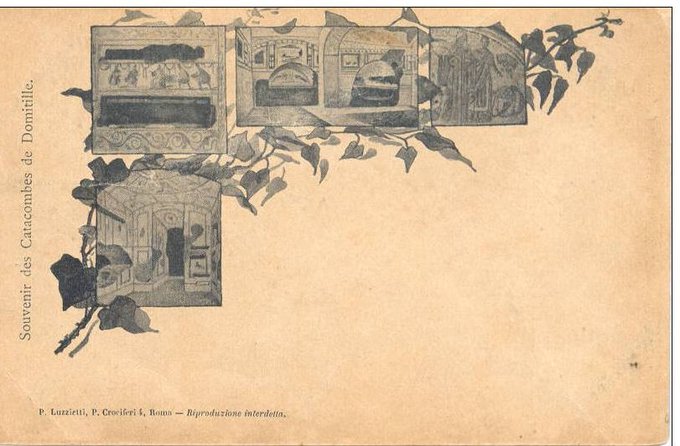
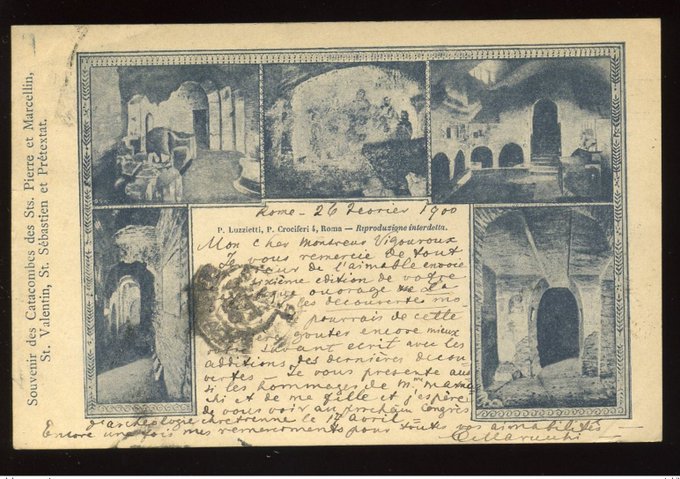
Postcards of the Roman catacombs by Pio Luzzietti

As earlier pointted out here, the postcards with pictures of the catacombs of Rome are enjoyable sources to understand the cultural impact of Roman catacombs in European culture in late 19th century.

This time, we will present three postcards issued by the famous Roman antiquarian library founded by Pio Luzzietti. The Libreria Antiquaria Pio Luzzietti had a very rich collection of historical prints and was very active in selling antique books and prints and publishing antique catalogues from about 1890 to 1930.

The founder Pio Luzzietti (1869-1927) was among the best known collectors and booksellers in Rome. He certainly had an interest in Christian archaeology, considering that he had acquired important libraries on the subject, such as Mariano Armellini’s and Enrico Stevenson’s. The bookshop was located in Via dei Crociferi 16, then in Piazza dei Crociferi 4 and finally – from 1906 – in Piazza d’Aracoeli 16-17.

The bookshop was a meeting place for Italian and foreign politicians and scholars. It is also known that the bookshop supplied prints and rare books to important institutions such as the Prints Cabinet in Rome and the museum of Castello Sforzesco.

Among all the prints, it is possible to find some postcards with scenes from the catacombs, dating before the year 1906. The language used is obviously the international one, French. But, unlike other postcards from the same period, the images printed on these catacombs are not taken from Giovanni Battista de Rossi’s Roma Sotterranea Cristiana. They are in fact artistic collages of real photographs of the underground architecture and paintings.

From this we understand that Luzzietti had original photographic material at his disposal, perhaps from libraries he had acquired.

Report

One of the aims of this website is also to keep an eye on other projects and research on the history of collections of Christian archaeology in Europe.

In this case we would like to point out the call for contribution to the website of the project God’s Collections by Crispin Paine and Jessica Hughes.

The project God’s Collections studies how and why collections have developed and lived inside places of worship of all traditions and chronology: check it out here.

Given the proximity of the themes of this work to the LIT! project, we hope to be able to undertake a future collaboration soon!

For the call for contribution see here.

(Church of San Salvatore – Museum of the Complesso di Santa Giulia – Brescia, Italy)