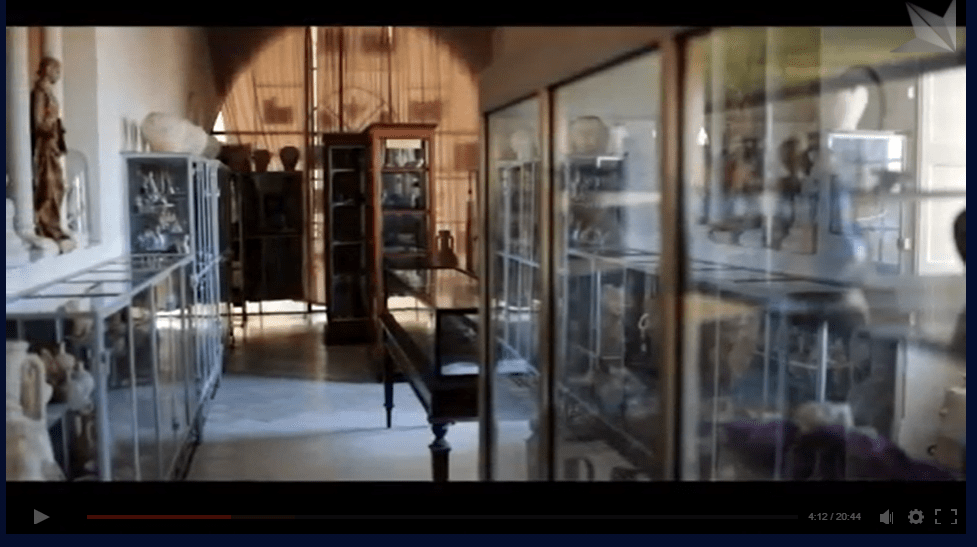
We are very happy to share the episode on the museum of the Complex of St. Agatha (Rabat, Malta) of the documentary “Il-Kollezzjonist”, created and presented by Raymond Saliba (a contribution to this site by Raymond can be read here).
The whole episode is available here. It is in Maltese language, but the images of the collection are pure bliss!
Congratulations to our friend Raymond for this beautiful episode.
Il-Kollezzjonist (The Collector) is a series of short documentaries that take the audience on a journey to explore some of the most beautiful private collections in the Maltese and Gozitan islands. It is presented by Raymond Saliba and Sharp Shoot Media Ltd. Il-Kollezzjonist started on the 30th December 2020, and is on air every Wednesday at 6.30pm on Television Malta. Follow the programme here.
The first part of the project was obviously dedicated to the start of the action and to the preliminary bibliographical study (identified as Work Package 2). The first three months, in fact, were dedicated to the bibliographical investigation and collection of all edited materials (from the late 19th century to the present). Every publication regarding the topic has been collected, in particular those related to the copies of the catacombs paintings set up in 1852 in the Lateran Christian Museum in Rome. This can be seen as the starting point of the artistic trend the project investigates. This research phase created the basis for the more detailed studies in the following months.
In fact, two months ago we moved on to the phase of analytical study of the individual cases (identified as Work Package 3). This involves collecting and analysing the already known cases and identified buildings. Given the period and the restrictions on mobility, the archival research has been concentrated in reduced periods of time, and documents has been read online aas well, while on-person surveys and documentation of the buildings have been postponed to the coming months.
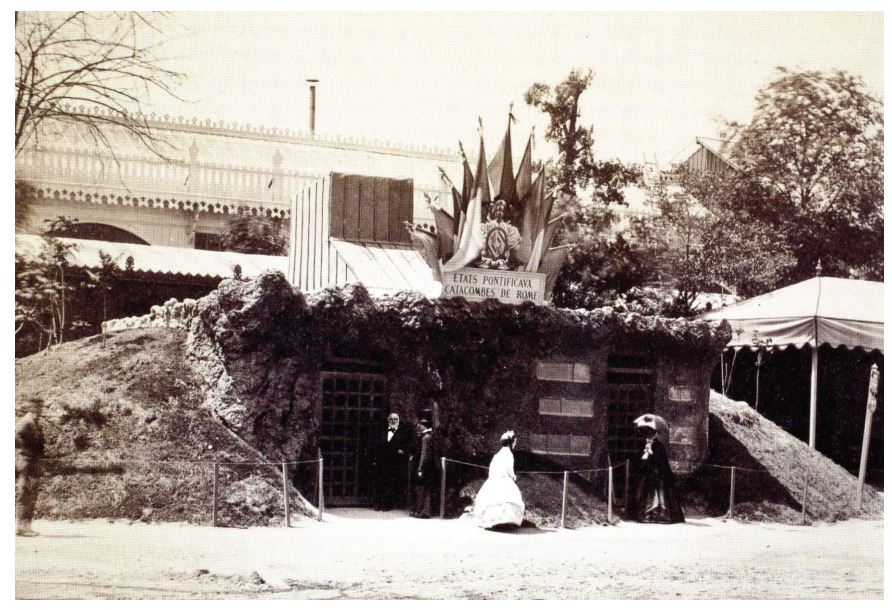
For now, the main case that was analyses is the facsimile catacomb, which had been sent to the 1867 Universal Exposition in Paris by Pope Pius IX. The research has led to a number of unpublished findings which will soon be made available both in specialist journals (but in Green Open Access) and on this website.
The next case to study is the museum of Tusculum (Solin -Croatia), set up by the great Dalmatian archaeologist Frane Bulic in 1898, decorated in catacomb and Pompeian style. The political and cultural implications of this operation are manifold, and the links with other European scholars of the time very stimulating. Similarly, working in an unfamiliar linguistic context has allowed us to make contact with local scholars who will certainly participate in the publication of the results. This, too, will thus create an important network of international contacts.

 Catacombs rediscovery