Malta

Some small mosaics from the catacombs to the museum

Summary of the speech read at the XXXI Aiscom Colloquium

The mosaic heritage in catacombs is very limited and concerns ‘three species of mosaic works’: the floors, the slabs (marble or fictile) closing the tombs decorated with series of tesserae, and finally the wall mosaics decorating the arcosolii or the walls and vaults of the cubiculi. I will not refer to catacomb mosaics in general, but focus on a few cases and their collecting fate.

The history of mosaics in museums for the first centuries of the Modern Age has some shadows. For the 16th century, for example, we have little information on pieces of Roman floor mosaics in collections, but I would like to point out that in Chapter VI of Giorgio Vasari’s Vite, Del modo di fare i pavimenti di commesso, in the chapter on architecture (and not on painting…) he comments on the way Roman mosaics were executed ‘come se ne vede in Parione in Roma, in casa di messer Egidio e Fabio Sasso’. Moving on to the 17th century, in the collection of Cardinal Maximus, there was a ‘Stanza ultima de Musaici’, there was a special room adjoining the library, dedicated precisely to the mosaics in the collection. Even in the library itself, however, there were mosaics.

During the 17th century, coinciding with the extensive underground discoveries, the existence of mosaics in the catacombs was noted, and they too entered collections and the antiquities market.

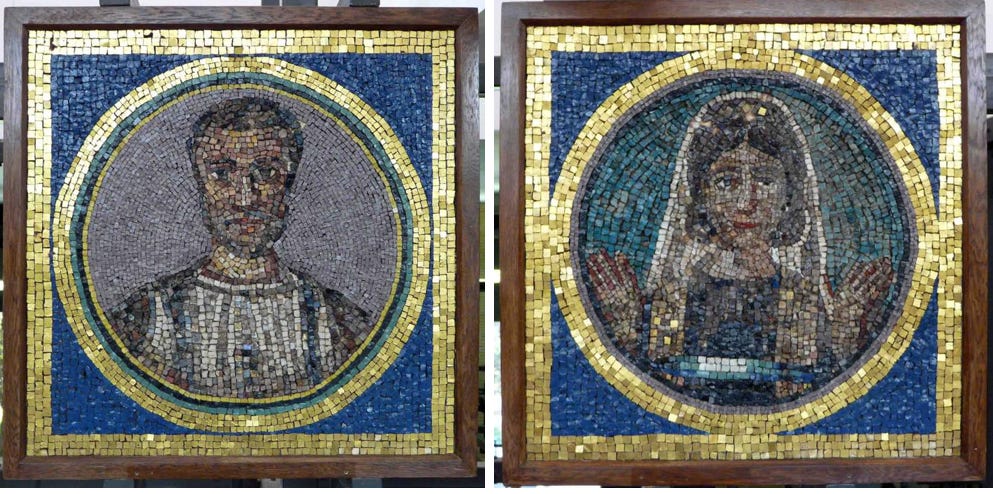
Following a ‘translation of saints’ bones’ in 1656 the mosaic portraits of Flavio Giulio Giuliano and Simplicia Rustica were discovered in the cemetery of Ciriaca, detached between 1656 and 1677 from a tomb with their epigraph and acquired by the collection of Agostino Chigi. They were placed, as was the custom at the time, on the wall in the staircase leading to the Library, according to a design by Pietro da Cortona Chigi and in a pattern not unlike the one we have mentioned for the Massimo collection. An interesting contiguity, therefore, between mosaics and libraries. It was not until 1918 that the mosaics were detached and acquired by the Lateran Christian Museum, where they were again restored.

Catalogue of the Vatican Museums

In the 18th century, the century in which mosaics made their entry into museums and collections, we find several testimonies of mosaics in the catacombs, without precise topographical references, by the Custodian of the Cemeteries Marc’Antonio Boldetti in 1720. He testifies of mosaic decorations on lithic or fictile supports, and is the main source on the topic for that century.

A couple of examples: Boldetti describes a brickwork from the cemetery of Ciriaca, on which there was a monogram between alpha and omega in mosaic tesserae. It is now lost, but at the time it ended in Gaetano Marini’s private collection. I do not think it is a coincidence that a mosaic artefact of this type, i.e. more epigraphic than artistic, aroused the interest of the leading epigrapher of the time, who was also the Vatican Librarian. Secondly, Boldetti draws a direct connection between some mosaics found in the catacombs and the Carpegna Museum: these are mainly ‘several birds and flowers formed on terracotta boards with non-ordinary artifice, and of minute workmanship’, i.e. emblemata, found between the Appia and Ardeatina roads, in particular at Callisto, used as closures for burial niches. All these pieces were later transported to the then Carpegna Museum in the Rione Sant’Eustachio in Rome, of which no further information is available afterwards.

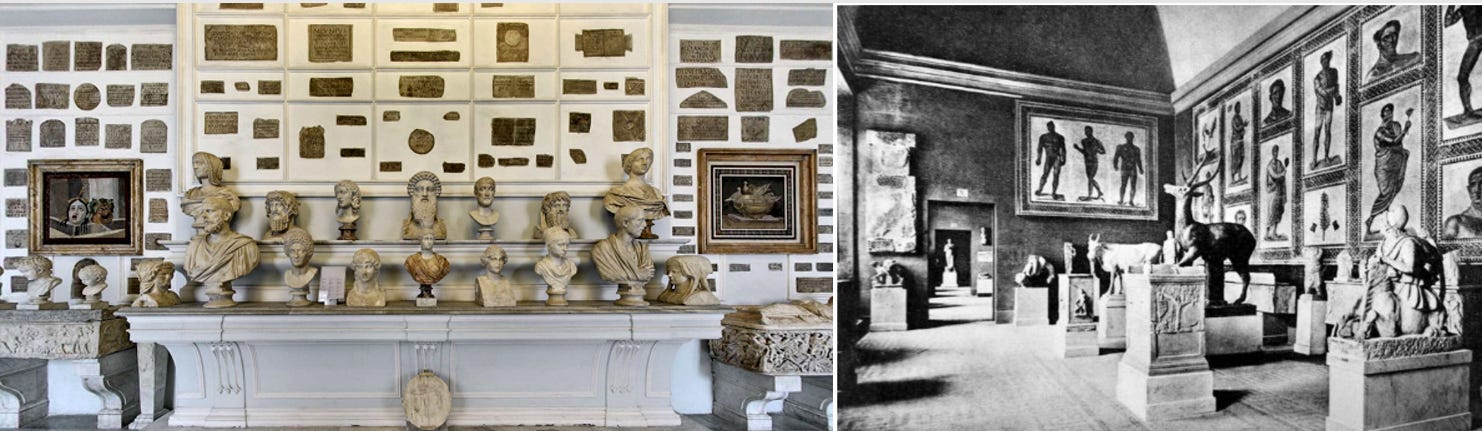
In general, mosaics in collections in the 18th century had to be tear out and cut up to make more artefacts, for immediate placement in an antiquarian market. The 19th century in Rome marked the beginning of massive systematic excavations in the catacombs, the founding of the first institution for the protection of these monuments and above all the opening of a large museum dedicated to them in 1854 at the Lateran Palace, where the discovered mosaics were directly brought. In the Lateran Museum, they are displayed into the wall, following a practice that has been going on for centuries, inaugurated in papal museums by the display of the Dove emblema of Villa Adriana. Indeed, in the Lateran Palace hosted the important museum experiment of displaying the mosaic of the athletes of the Baths of Caracalla, discovered in 1824 and then placed in the museum in 1836, first in an imaginative reconstruction of the floor and then set into the wall, had been developed.

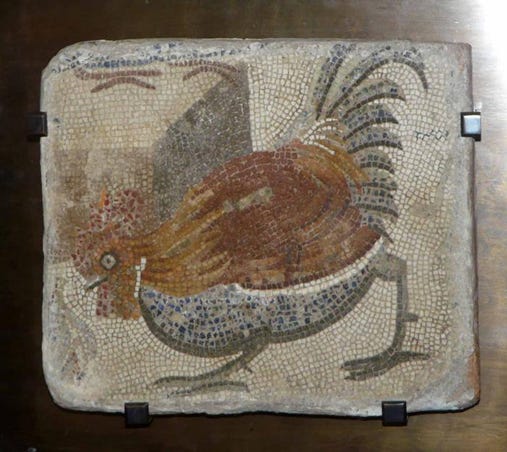
For our theme, an emblematic case is the brick with the mosaic image of a cock, a pavement emblem probably reused to close a niche. It was discovered in 1837 during the works of Virginio Vespignani in the cemetery of Verano, as stated in the sixth volume of Louis Perret’s disputed Catacombes of 1852, which places the mosaic to cover an unspecified martyr’s grave. Upon its discovery, it was sent straight into the Lateran Museum, where it was slightly restored and placed on the wall, in the large gallery of sarcophagi, along with all the other ‘sculptural works’, as noted in the catalogues of the time.

During the 20th century, the museum housed both mosaics previously housed in private collections (as the one in the Chigi Library which passed to the Laternanense Museum and then to the Pio Cristiano in the Vatican) and new discoveries, such as the two fictile slabs decorated with polychrome glass mosaic tiles from the Aproniano catacomb depicting three episodes from the biblical story of Jonah. They were discovered on 1 February 1938, the Pontifical Commission of Sacred Archaeology donated them to the Holy See and they immediately entered the Vatican collections, also becoming part, in 1963, of the new Pius Christian Museum opened in the Vatican after the closure of the Lateran Museum. Perhaps the most linear path in our little story.

An account of an excavation diary from 1915

One of the most important tasks of an archaeologist on an excavation is to keep a diary in which to record daily work and eventual discoveries, a diary that thus becomes the main source of facts and details of an archaeological exploration of any kind. Keeping an excavation diary is a sort of obligation towards both the past that unfolds before us and the present and future generations that expect us to take care and attention to preserve the discoveries. Even the archaeologists of the past have not shirked this obligation: there are some diaries of excavations from centuries ago that are extraordinary texts (such as, for example, the eighteenth-century diaries of the discoveries of the Vesuvian cities, which take us by the hand on a tour of wonders to places that are still mythical today), but all of them, even the lesser-known ones, maintain a charm that those objects that act as a bridge between us and the thinking of our ancestors know how to have.

One of the most interesting diaries for catacomb archaeology is the excavation diary of the Swiss Paul Styger, archaeologist and scholar of Christian antiquities in Rome, professor of archaeology and religious arts in Poland and one of the protagonists of the potpourri of nations that was the horizon of archaeological science in Rome in the early 20th century.
Due to a series of fortunate circumstances (in particular, his proximity to the German circles in the Vatican that a century ago were carrying out archaeological research and museographic experiments in the Eternal City), Styger found himself -between 1915 and 1917- directing the excavation of the church of San Sebastiano on the Via Appia in Rome. This is a very important site: an ancient church that later became a Baroque jewel, but set on an extensive cemetery area.
Styger’s excavation is particularly concerned with investigating the area directly underneath the nave and the Platonia, with the intention of also tracing the tomb where, according to a tradition invented in the Middle Ages, the bodies of Peter and Paul extracted from their original tombs in the basilicas of the same name would have been temporarily protected.

Source: P. Styger – Archaeologist at Rome and Professor at Warsaw
By Elzbieta Jastrzebowska

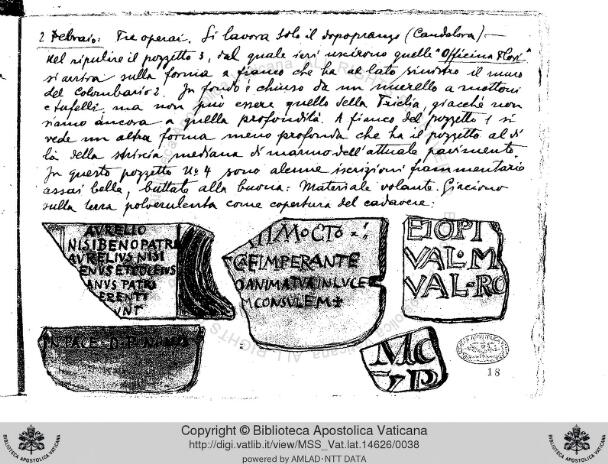
The diary is a little gem. It starts on 8 February 1915, ends on 27 February 1917 and is a mixture of text and pen illustrations, later coloured in watercolour. It is a true snapshot of what it must have been like to manage an excavation at the time, with constant inspection visits by the Ministry of Education and the Commission of Sacred Archaeology, fluctuating relationships with the workers, and more or less long interruptions for various reasons. The most beautiful feature are of course the drawings, not only of the individual objects found, but also of some of the structural situations found during the excavation.


The diary arrived in its current location in the Vatican Library after Styger’s death in 1939, by his own will, after having been missing for a while. This is confirmed by a letter pasted at the end of the manuscript, in which his sister refers to a certain Gerke who will help her find this diary and donate it to the library. At the end of this letter, an anonymous hand adds, in pen, that he received the diary on 31 May 1939 and adds: ‘And Gerke, if I am not mistaken, is the Nazi whom those of the Commission of Sacred Archaeology allowed to examine the excavations of the catacombs with all freedom, while they would have obstructed the Styger’. A small note full of implications, which relates to the strong relations between archaeological bodies and certain authoritarian political parties in the 1930s and 1940s, an issue that archaeological historiography has yet to come to terms with.
As an appendix to the diary, there are some typed sheets, with pencil-drawn illustrations, in which Styger lists pieces found in various catacombs during the 1920s, which were then lost, either because they were left on the site and treated carelessly, or because they were not handed over to the Vatican Museums. This list, too, is a singular evidence the practices of preserving artefacts: not a few objects were damaged by handlers who had ‘tried to tear them off’, or because they were left ‘without any precautions to save them’.

Work in progress: map of the project UndergroundMed

Please note that the homepage of the UndergroundMed project now hosts the map of the catacombs, archives and museums under study in the project.

The map is being continuously implemented as the research progresses, and will contain a lot of data and information regarding the rediscovery of catacombs in Italy, Tunisia and Malta between the 16th and 20th centuries.

Saturday morning at the Vatican Museums

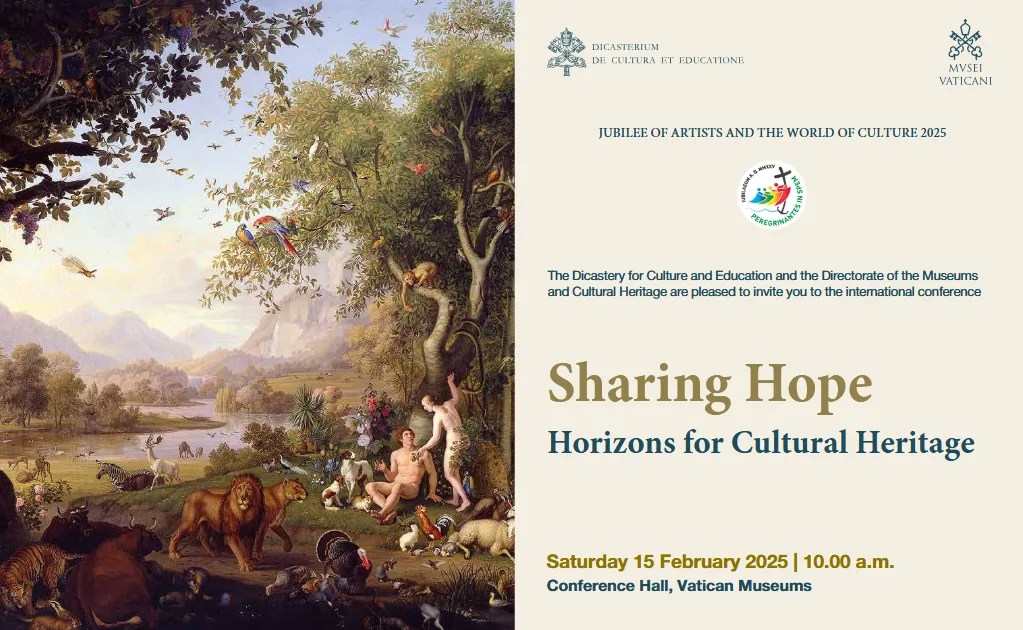
Last weekend I had the opportunity to take part in some of the events of the Jubilee of Artists and the World of Culture, which was held in the Vatican on 15-16-17 February 2025. Among the various religious celebrations, there was an international congress at the Vatican Museums, organised by the Museums themselves and the Dicastery for Culture and Education. The event aimed to bring together cultural workers from the Vatican State and various international representatives of institutions related to culture, the arts, research and teaching, including an important group of speakers chosen for their roles within the main Italian museums and universities.

The morning session was an important opportunity to reflect on the present, conceived as an analysis to understand what future awaits cultural heritage, as expressed by the title of the meeting ‘Sharing Hope – Horizons for Cultural Heritage’. The target was clearly the cultural heritage inherent to Christianity, but with a necessarily universal focus, if one thinks of the impact Christianity has had on European art. This is a subject very close to some of my recent studies and that is why attending this meeting was extremely inspiring.

In general, the experiences brought to the table were all of great interest, and all focused on the need to address a new cultural horizon so that Europe’s heritage does not become mute in the face of the growing backwardness of religious culture. I will not go into the details of the individual interventions, but I will report what for me were the most important points of reflection of the morning:

– The cultural code of the monotheistic religions can be considered as an indispensable iconographic volume to understand European art, a sort of manual through which to understand scenes and references. Much of European art is art born in churches, and therefore born to enliven faith: to forget this is to consider only the aesthetic aspects of a work, risking emptying it of its soul.

– The codes of understanding, however, are neither univocal nor fixed in time, and the sense of the sacred in all civilisations is made up of stratifications. Museums must always take this into account when communicating, increasingly moving towards an anthropological approach to monotheistic religions as well. In this sense, it is good to think of museums as two-faced beings: they look at both the past and the future at the same time, while remaining firmly anchored in the present.

– In the process of communication and valorisation, one has to take into account that cultural heritage is always an extremely contested point in societies and between generations. Doing culture in a museum or in research and educational institutions involves thinking about investing in the future: in a museum, when we conserve and enhance, we are responsible for a dialogue between generations, in which we must aim to meet and overcome the sense of superiority we have towards younger people.

The second part of the meeting included the presentation of the ‘Manifesto on the transmission of the religious cultural code’. Such initiatives are not new for Vatican cultural institutions: one example is the ‘Circular Letter on the pastoral function of ecclesiastical museums’, published in 2001 to become an important vademecum on how to manage ecclesiastical museums in the contemporary world.

The new Vatican manifesto is a declaration of intent focused precisely on a generational pact that has religious cultural heritage at its centre. It is composed of seven parts that briefly condense the focal points of the contemporary debate in international museology (1. Accessibility and codification; 2. Inclusion and innovation in cultural languages; 3. Education for active and deep involvement; 4. Artificial intelligence and bridges to the future; 5. Awareness and re-contextualisation; 6. Custody and transmission in times of crisis). It is the result of shared reflections, according to more universal ideas of peace, hope and dialogue, i.e. the themes of the current Jubilee.

The text in general presents a little bit of paternalism, a naïve vision of the “power of Beauty”, and presents a concept of inclusion that is extremely limited to a communicative rejuvenation. But beyond this, the manifesto is interesting for its focus on issues of communication, education and access to museum content.

I highlight just a few points:

Point 1, Accessibility and codification: it enhances the concept of accessing and understanding information through various media, very close to the indications given by the International Council of Museums in the new 2022 definition of museums.

Point 3, Education and involvement: it is assumed that learning happens in various forms, with interaction and involvement on various levels not only through passive actions of listening and reading information shared in a unidirectional way, with the top-down approach typical of museum curatorship in the past.

Point 5, Awareness and re-contextualisation: at every communicative moment, it is necessary to be able to critically question the meaning of the works, their historical context and the ethical issues related to their provenance. Here is where the question of the critical meaning of things arises, against any kind of simplified narrative.

These are very important seeds in a horizon of disorientation in which museums need to keep straight in order to continue their work of dissemination and inclusion without losing the direction themselves. It starts from the Vatican’s main museum with the ambition to reach all Christian and Catholic museums around the world, as well as all those who deal with religious heritage.

Christian catacombs of Sousse – Tunisia. Some information and images

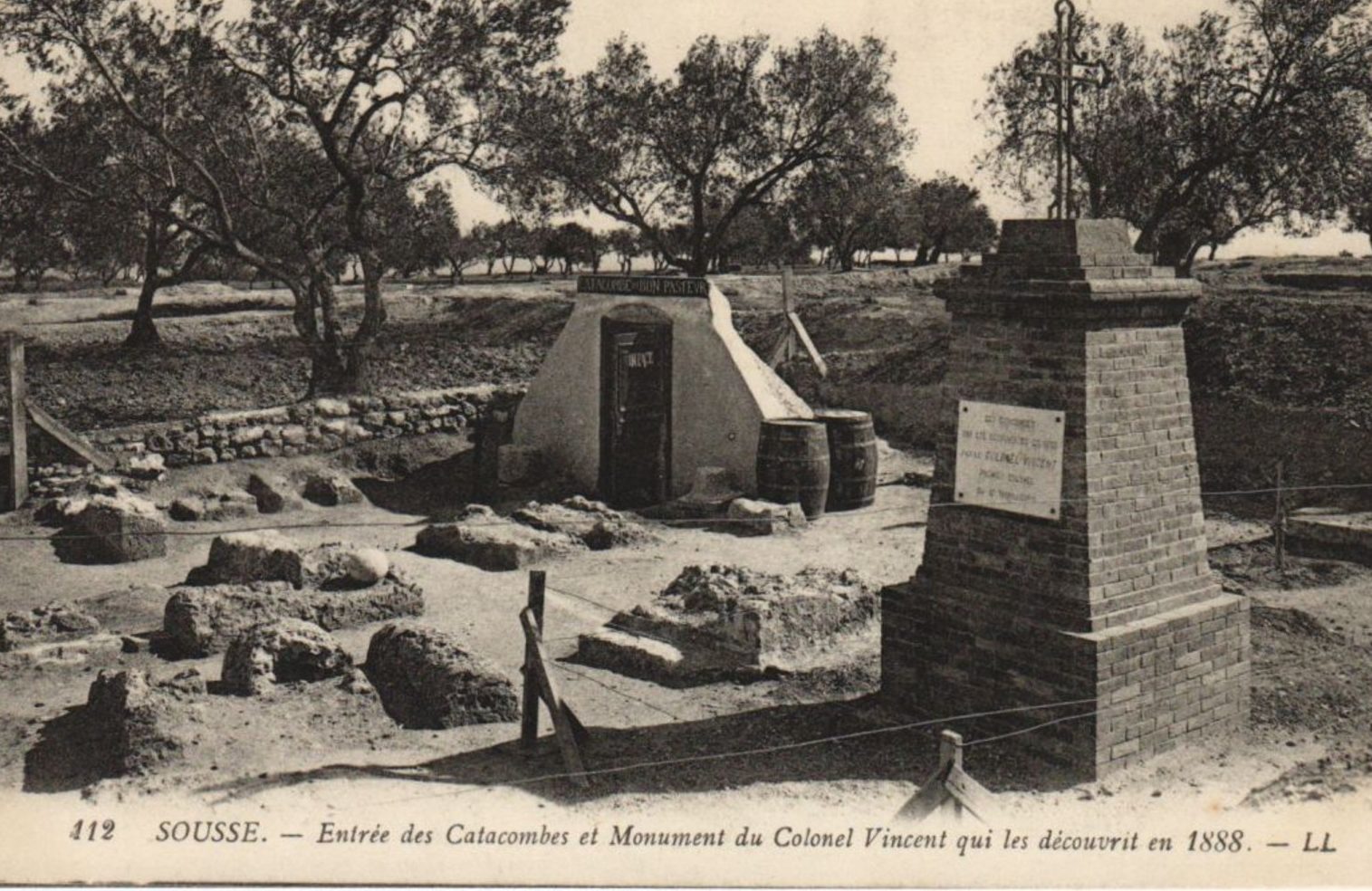
At the end of 1880s, a colonel of the 4th Algerian Rifle Battalion stationed near the Tunisian city of Sousse, the ancient Hadrumetum, accidentally discovered a catacomb gallery, sparking the interest of local society in Christian antiquities.

It was only at the end of 1903, however, that Abbot Leynaud and doctor Carton managed to receive funds and permits to undertake excavations, thus uncovering what became known as the Catacomb of the Good Shepherd, the first and largest Christian catacomb found in North Africa.

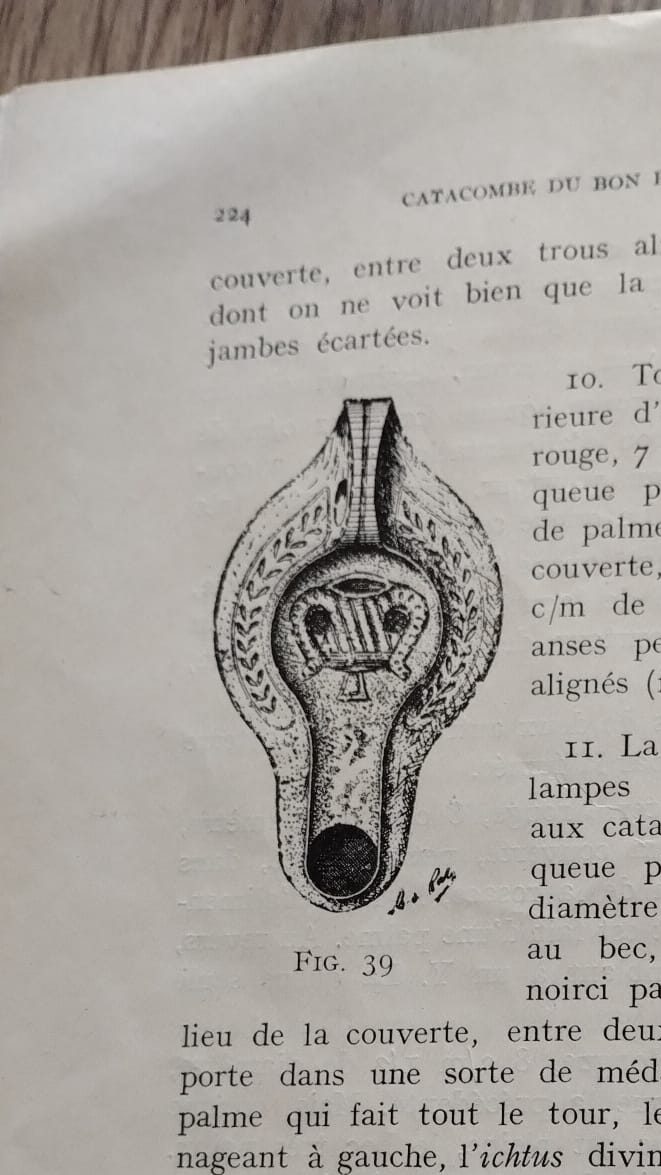
This was the starting point of a compelling story of discovery that, through ups and downs, led the French abbot to recover no less than five catacombs in the Sousse area. This led to a wider knowledge of the Tunisian catacombs from an architectural point of view (with the production of the first maps), and of the materials found, particularly funerary inscriptions and oil lamps.

These excavations brought visitors and tourists interested in Christianity to the ancient Hadrumetum for the first time. This was precisely one of the intentions of the abbot, who is also strongly committed to promoting the site from a touristic point of view.

Leynaud’s work was the first and last systematic excavation of the catacombs of Sousse, which still remain intermittently visitable today and still tend to be little known.

Anyone still interested in this story today will find all the historical and archaeological details in a series of reprints and publications of the seminal volume ‘Les Catacombes Africaines’, still the only real handbook on the catacombs of Sousse.

Why were catacombs explored?

Having briefly looked at how the catacombs were explored in early 17th century, let us consider why they were explored, apart from walking to encounter new areas of the monument.
The activities that took place underground tended to be that of registering the monument and extracting finds from it.
Registering the monument involved drawing the plans, an activity for which there were specialised people, of whom we know some names and some products, in particular those published in several books.

Plans of the catacombs on Via Nomentana in Rome published in 1632 in Bosio’s Roma Sotterranea


Alongside these, however, there were also more private, “homemade” maps, used by explorers for their personal exploration, which were never published but were used for underground visits. Of this maps, obviously, we have very scarce information.

Specialist artists were employed to copy the paintings seen in cemeteries. Copyists accompanied explorers on underground expeditions. The copying phase in catacombs was the most uncomfortable working situation, with insufficient light and space conditions. The subsequent stages of drawing arrangement and colouring took place in the studio.

Early 17th century copy of a painting from the Domitilla catacomb in Rome.
Vallicelliana Library of Rome

Another of the occupations of the groups of explorers was the extraction of archaeological objects, especially epigraphs, as well as anthropological remains excavated with the intention of making relics. The majority of archaeological finds ended up in the private collections of the explorers and the main collectors in Rome: sometimes explorers became a sort of merchant of antiquities for the antiquarian market. In particular, sarcophagi and inscriptions from the catacombs ended up since the beginning of the 16th century, as decorations in private houses.

The second group of objects found within the catacombs and removed from them are the anthropological artifacts, extracted from the tombs specifically to create holy relics. But that is another story….

Why I left Facebook and Twitter as a European researcher

This entry may appear very far from the general aim of this website. But everything we do is a political act, even our silence. A short reflection on why I left Facebook and Twitter.

I opened my Facebook account as soon as I arrived at university (so 17 years ago…), in the first few years I used it a lot, then less and less, until I posted a few scattered photos every three-four month, ending in an absolute silence on 25 April 2024. In 2015, for an event I was attending that involved live tweeting, I opened a twitter page, long forgotten but then used frequently over the last two years, only to become a spectator lately. No instagram, no tik tok.

I am a researcher. I am currently on my second research contract: I was in Spain for three years and now I am an happy postdoctoral fellow at the University of Malta. Both these contracts are within a major European university research funding scheme. This means that my salary comes from the taxes of European citizens, and that my work must go back to them, through a continuous work of dissemination of results on various levels. Europe demands this widespread dissemination from us, just as it demands adherence to the inviolable pillars of transparency in work, in practices, in the dissemination of results.

In general, the relationship between academics and social media is definitely interesting. It is undeniable that for many years, ever since the need to democratise the impact of our research became bigger, social platforms have been at the heart of all the projects funded at academic level for the dissemination of results, perceived as the main vehicle for wider reaching.

I have never shied away from this practice, even though it has been very difficult for me: not only have I always struggled to maintain a continuous online presence (which is the key to success, they say), even for this website, but it has undoubtedly been precious time taken away from research work, time spent on activities with no results in terms of quality and visibility. Those few moments of feeble visibility, which happened quite accidentally when I was working in Madrid, were in any case tremendously ephemeral from a quantitative point of view, and totally null for disseminating results, or obtaining feedback of any kind.

However, if I look at my colleagues (those who are on similar career levels) and their social presence, it seems to me that from the academic perspective it is a full illusion to find visibility through social media. The posts we embark on are all the same, according to standards of self-promotion that can also be slightly pathetic: lots of ‘I am thrilled to announce’ for new articles/works/projects published, achieved, funded, etc. that don’t really interest anyone, receive a few dozen interactions and fall at great speed into the oblivion (in fact, it is well known that the life of posts on the main social networks is only a few minutes).

Moreover, the majority of academics on social media actually live between self-promotion and complaining about the funding and recruitment dynamics of our ivory tower. They end up being a group that ultimately becomes self-referential, whose posts do not leave the insiders’ circle (thanks in part to the algorithm), and whose members seek approval more than scientific confrontation or information.

This was what I felt I was trapped into, and also had a hard time staying afloat. And this, then, was the cause of a gradual shift from fatigue to social awareness.

A somewhat clearer view of what social platforms are today was offered to me by Alex Grech’s Young People and Information manifesto, the main source of what appears in the following sections. [Incidentally, it was his very interesting seminar at the University of Malta on Social Media and Academics that gave me the final push to deactivate all accounts].  Grech reminds us how the speed and urgency to publish according to the expectation of the public can compromise the truth by making social media fertile for extremism, discrimination, disturbing content always accessible without control. Technology is no longer that miraculous asset for collective freedom that was imagined years ago, but is increasingly a tool at the economic and political service of those who own, create, can buy and control it.  The Internet is no longer the place for widespread democracy, but that of constant surveillance and commercialisation, under the hegemonic control of those who run the platforms. Everything is monetised, the individual user is a source of information to resell, no longer a citizen with ideas in a community, but an individual who feeds a machine in which interactions and likes are the only indicators of personal success and human value.

Under this control, the algorithm is the main weapon of a political and propaganda technology that manipulates choices, tastes, behaviour, and purchases. The algorithm shapes what we consume and allows the platform to control the flow of information, collecting data opaquely and pushing engagement at the expense of integrity. There is no room for integrity in the parallel post-truth world of these platforms; truth, that is at the very basis of academic research, is no longer needed and outdated. Disinformation and misinformation are therefore not limited problems that can be solved, but symptoms of a broader social condition.

The last straw in this bleak panorama was for me how the big tech stars flocked to salute the new US president, which exacerbated the moral issue arose with deepening the problems mentioned so far. The reflexive relationship between technology (read: billionaire giants that own the platforms) and society in its political expression makes these issues now public and necessary, and not limited to the sphere of what happens online: fake news, control and the dissemination of propaganda for hegemonic purposes have now entered our society, our homes, from the screen we all carry in our pockets.

An example of this is Musk’s new habit of commenting European politics; a billionaire who uses his voice to spread opinions favourable to the far-right and thus against the truest core of the institutions to which I belong (i.e. the EU). And he speaks using a very powerful platform, which contributes to the political polarisation of ideas, the amplification of propaganda and disinformation at the expense of user privacy and truth.

Here, then, is what we feed with every single post. And as if that were not enough, user-generated content (and thus generated by researchers too) plays a key role not only in enriching these plutocrats with fascist sympathies, but in feeding to those AI content generators of which we are only now beginning to understand the danger to university teaching and research.

This is against my innermost being as a person, as a citizen, as a mother and as a researcher. Indeed, to leave social media and give up even my mere presence as a spectator is for me a political act that I do precisely from my being a researcher. Research can and today must transcend this slavery, in the name of freedom of thought, of speech, and of choice of where and how to communicate. By maintaining our online presence only on our websites, perhaps the future of communication and the dissemination of the results of European projects can be precisely that of going back to the people, without a screen: a conference, a meeting, a guided tour, a fair, the often manage to gather a larger number of people than a single self-promotional post, adding the human factor, the physical involvement, the creation of direct links.

How were catacombs explored?

Exploration of Christian catacombs was a widespread and very fashionable practice in Rome between the sixteenth and eighteenth centuries. It involved Roman population, regardless of their social classes, as well as scholarly and ecclesiastical groups from outside Rome, generating a huge wave of interest in Christian catacombs that revolved in a “race” for catacomb exploration.

From a technical point of view, the ways of exploring the catacombs remain the same throughout the centuries. And the problems due to the architecture of the catacombs also remain the same: the darkness, the inconvenience of access, the labrinthic structure.
The theme is, therefore, universal and serves a reconstruction of catacomb explorations over the centuries.

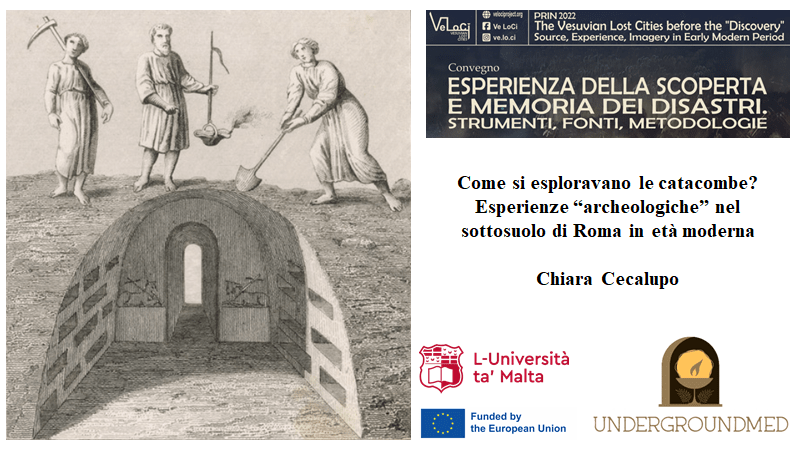
An answer to the question “how were the catacombs explored?” was given during an interesting conference in Rome in November 2024 (Here is the link: https://www.velociproject.org/en/events/rome24 )

The catacombs were accessed through random openings in the countryside, or specially dug ones, from which one descended and from which one exited along with the finds recovered underground. It was therefore necessary to make them wider; hoes and spades were used, as well as ladder. To make one’s way through the tunnels without fear of losing one’s way, long ropes were used that were tied to the entrances and then uncoiled as one went along, or one could mark the points at which one turned at each fork in the road. Then of course one had to use flashlights and candles, in such quantities that they could last for days.

Once inside the catacomb, therefore, one proceeded mostly on all fours, or by crawling, or enlarged passages by excavating the tufa.

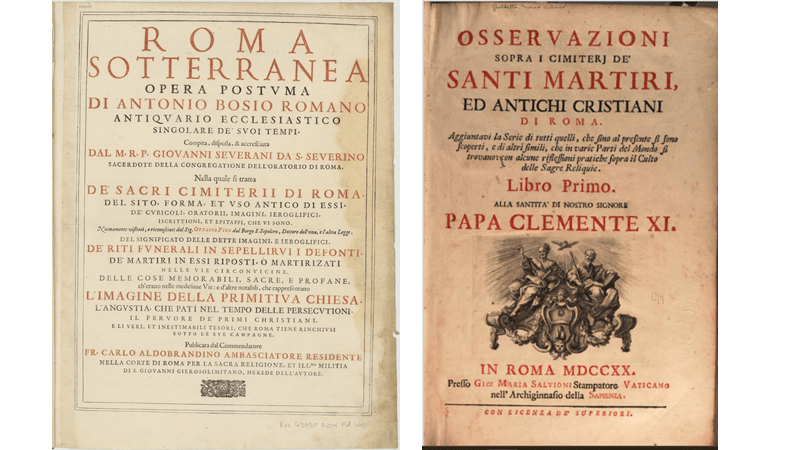
“Roma Sotterranea” (1630) and “Osservazioni sopra i cimiteri de Santi Martiri” (1720)
are the main sources of information for this topic.

Then, once inside the catacomb, one would proceed to walk around to find new areas and discover new parts of the monument, especially galleries with closed tombs.

But aside from basic exploration, what was being done in the catacomb? Coming soon…

Two 17th-century images from the Catacombs of Priscilla (Rome)

The “Cubicolo della Velata” (Cubicle of the Veiled Woman) is one of the most famous burial chamber in the catacombs of Rome, known since the 16th century and much loved by all scholars of the past. It is located in the central core of the Catacombs of Priscilla in Rome, and its name derives from the presence of a ‘Veiled’ woman painted in the bottom lunette in a praying attitude. The scenes, dated to the late 3rd century, are interpreted as the important moments in the life of the deceased: her marriage (left), motherhood (right) and her admission among the blessed (in the middle).

It was one of the very first places to be investigated by explorers in the 16th century. In fact, we have two original drawings reproducing the cubicle, preserved inside two important manuscripts in the Vatican Library.

The first, Vat. lat. 10545, f. 187r, dates from around 1590 and was executed by a draughtsman from the circle of the Flemish scholar Philip van Winghe, who is also known for having executed the first extant plans of the Roman catacombs.
The style of the copy is very simple and straightforward, almost childlike, but close to the original, a typical feature of copies of catacomb paintings in this manuscript.

The volume can be viewed in full here: https://digi.vatlib.it/view/MSS_Vat.lat.10545

The second, Vat. lat. 5409, f. 24r, belongs to the rich set of images of the Roman catacombs in the work of the Spanish Dominican Alonso Chacon, and dates to the late 1590s.
The drawing is completely different from the previous one, the original early Christian painting is copied in a very baroque manner, with reminiscences of Michelangelo and a richness that does not belong to the style of the catacomb art. In addition, the inconographic reading is also misinterpreted, creating images of Christ and Mary that do not correspond to the original work.

IThe volume can be viewed in full here: https://digi.vatlib.it/view/MSS_Vat.lat.5409