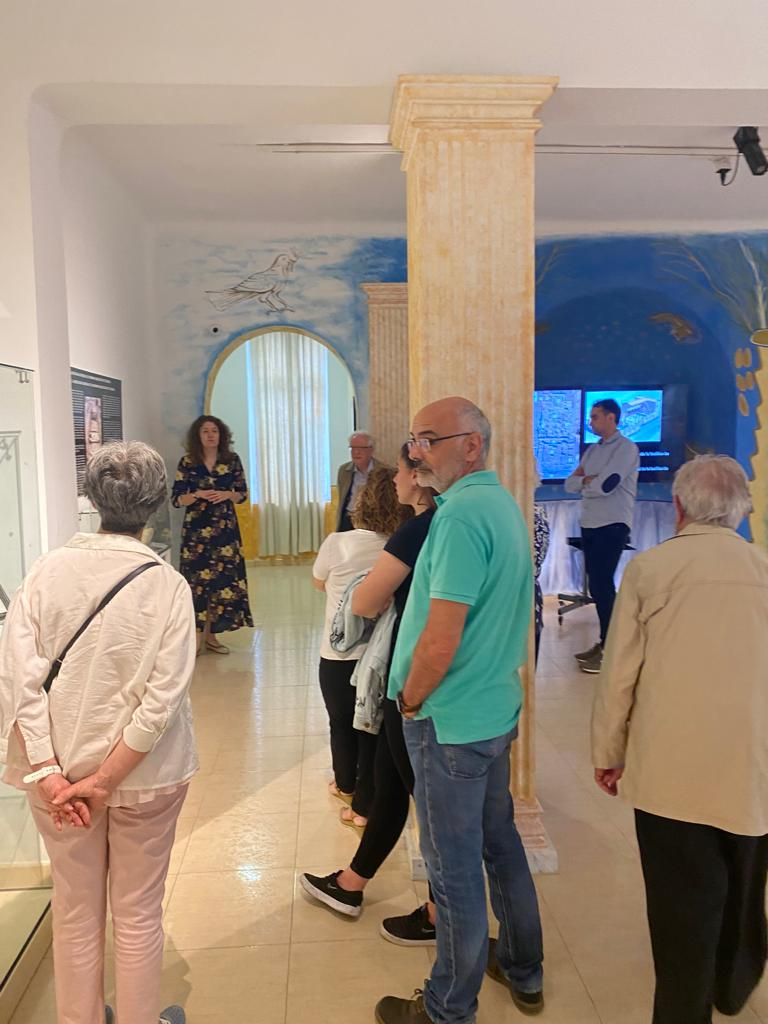
On the 30th June 2023 I joined the technical meeting on the future of the necropolis of Tarragona in the year of the 100th anniversary of its discovery, organised by the director of the National Archaeological Museum of Tarragona.
The necropolis has awarded seven million euros from the EU Next Generation funds, in the fSpanish “Plan de Recuperación, Transformación y Resiliencia” for its restoration and reopening. In light of this news, a panel of interdisciplinary professionals and the heads of the cultural organisations of the city of Tarragona (full programme here) got together to ask ourselves: One hundred years after its discovery, what are the most outstanding values of Necropolis that we must preserve for the future? And what needs to be done to transmit and enhance these values?
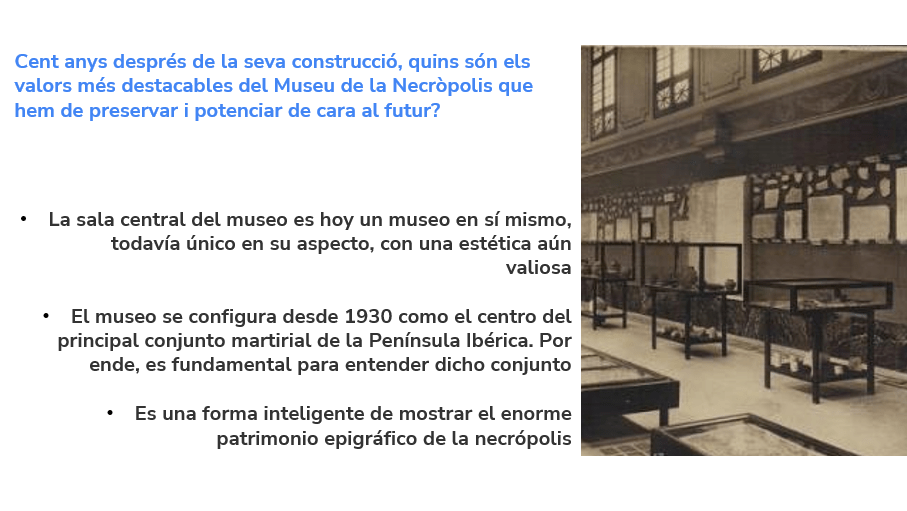
My role wwas to provide answers under the museologial point of view. In a full morning of work I presented some results of the study carried out during my secondment in 2022 (more info here). the answers are about to be developed more deeply in a pubblication, but this is the core of my presentation:
The day aimed to exchange points of view, offer a dialogue and reflection on this site and was open to the public, both in a presencial format and online, and is fully available online:
On 3 June we closed the exhibition «Los orígenes de la arqueología cristiana de Tarragona y la figura del Dr. Pere Batlle Huguet (1907-1990)» at the Museo Biblico in Tarragona. it was organised as part of the dissemination programme of the Conex-Plus project LIT! with the collaboration of many local and international institutions (as explained here).
This month has been very busy, the museum has been open and the entrance free of charge, offering lectures of various kinds and guided tours of the exhibition, to which the citizens have responded very well. The events were always very crowded and heartfelt: many friends, relatives and acquaintances of Pere Battle accompanied us in these activities and shared their memories and photographs with us.
The exhibition therefore closes with the certainty of having left something in our visitors and having learned from them, created connections between institutions and helped to enhance the heritage of the city of Tarragona.
The exhibition «Los orígenes de la arqueología cristiana de Tarragona y la figura del Dr. Pere Batlle Huguet (1907-1990)» is intended as a tribute to Dr. Pere Batlle, an important figure for the protection of the archaeological and artistic heritage of the city of Tarragona, who wrote the first scientific work on the Christian epigraphs of the Roman-Christian necropolis of Tarragona.
It is also an opportunity to deepen and disseminate some important findings about his person and his work and finally to transfer knowledge about the genesis of Christian archaeology in Tarragona.
The exhibition is part of the UC3M Conex Plus project “LIT! Living in the catacombs! Reception of catacomb art in European culture and architecture between the 19th and 20th century”. It was born from an idea of Chiara Cecalupo and the director of the Museum Andreu Muñoz, with the cooperation of their collaborators, but also from the contribution of the Historical Archive of the Archdiocese of Tarragona and the Library of the Pontifical Seminary, in particular the director Enric Mateu. Other entities such as the Catalan Institute of Classical Archaeology and Tarraco Viva, the Roman Festival of Tarragona, as well as the Pontifical Institute of Christian Archaeology of Rome also played an important role. This harmony of local and international collaboration has therefore been a good opportunity to create a link between people and institutions that enhances Tarragona, its heritage and history, and which hopefully will continue in the future in other activities and with the same spirit.
The exhibition is structured in the following sections: 1. Christian archaeology and the first art of the universal Church. 2. Christian archaeological heritage of Tarraco. 3. Christian archaeology in Catalonia between the 19th and 20th centuries. 4. Dr. Pere Batlle Huguet. His training and research in Christian archaeology and epigraphy. 5. Safeguarding the heritage of Tarragona.
The exhibition is located in the Biblical Museum of Tarragona, specifically in the room dedicated to the early Christian world (Mn. Joan Magí room). The exhibition contents are projected through a set of explanatory posters accompanied by archaeological objects, photographs and documents.
The exhibition has been scheduled to run from 10 May to 3 June 2023 and the planned activities are set out below:
–10 May, 7 p.m.: Opening act and lecture: “The origins of Christian archaeology in Tarragona and the figure of Dr. Pere Batlle Huguet (1907-1990)”, by Dr. Chiara Cecalupo (UC3M). Auditorium of the Museo Bíblico Tarraconense.
– 18 May, 7 p.m.: Lecture: “The Cathedral of Tarragona: Contributions to the Christian archaeology of the city” by Dr. Josep M. Macias Solé (ICAC). Auditorium of the Biblical Museum of Tarragona.
– 20 May: Guided tours of the area of the latest archaeological work in the cloister of Tarragona Cathedral. By the archaeologists Josep M. Macias Solé (ICAC), Andreu Muñoz Melgar (MDT/ICAC) and Andreu Muñoz Virgili (ICAC).
– Saturday 27th May (11 a.m.), Wednesday 31st May (5 p.m.), Saturday 3rd May (11 a.m.). Guided visits to the exhibition by Dr. Chiara Cecalupo (UC3M). The visits are free of charge and without prior reservation.
More info at museu.biblic@arquebisbattarragona.cat
A video (in Catalan and Spanish) of the opening and the exhibition:
The catalogue of the exhibition is in open access for free downloading:
Scientific Committee of the exhibition: Chiara Cecalupo (Universidad Carlos III de Madrid) Josep M. Macias Solé (Instituto Catalán de Arqueología Clásica) Enric Mateu Usach (Archivo Histórico Archidiocesano de Tarragona y Biblioteca del Seminario) Andreu Muñoz Melgar (Museos Diocesanos de Tarragona / Instituto Superior de Ciencias Religiosas San Fructuoso) Míriam Ramon Mas (Museos Diocesanos de Tarragona) Stefan Heid (Pontificio Istituto di Archeologia Cristiana, Roma) Immaculada Teixell Navarro (Asociación Cultural San Fructuoso) Exhibition curators: Chiara Cecalupo (Universidad Carlos III Madrid) Míriam Ramon Mas (Museos Diocesanos de Tarragona) Texts: Chiara Cecalupo y Andreu Muñoz Melgar Production and assembly: Josep M. Brull Alabart, Magda Domènech Jordà, Rosa Ferré Rovira, Roser Fornell Guasch, Josefina Folch Sabaté, Josepa Franquès Bultó, Joaquim Galià Romaní, Sergi Guardiola Martínez, Dolors Iglesias Torrellas, Joan Quijada Bosch, Neus Sánchez Pié, Paco Roca Simón, Jordi-Lluís Rovira Canyelles, Adolf Quetcuti Carceller y Andreu Ximenis Rovira. Audiovisual: «La Tarraco de los primeros cristianos», Asociación Cultural San Fructuoso Acknowledgements: Asociación Cultural San Fructuoso Museo Nacional Arqueológico de Tarragona Real Sociedad Arqueológica de Tarragona Jordi López Vilar
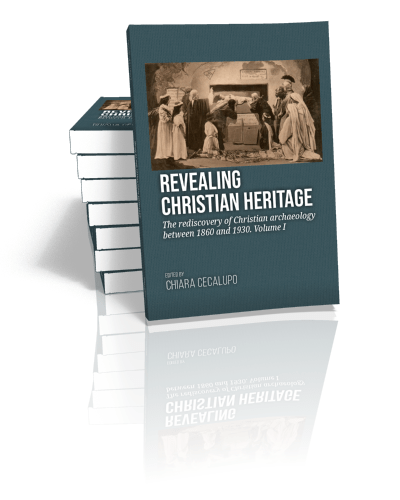
The rediscovery of Christian archaeology between 1860 and 1930. Volume I
This book is first product of the international online workshop series “Revealing Christian Heritage. Talks on the rediscovery of Christian archaeology between 1860-1930”. It collects different case studies of rediscovery of Christian antiquities between 1860-1930 in Europe and the Mediterranean basin, in order to stimulate reflections about the impact of these rediscoveries on our culture in a period of great political transition.
By turning the light on lesser-known stories on a wider European and Mediterranean horizon (Greece, Holy Land, Eritrea, Malta, Norway), this book gives a strong contribution to the history of Christian archaeology. All articles deal with many topics of the field (museology, cultural heritage protection law, history of religious orders, field archaeology, military explorations), and therefore offer a strong interdisciplinary cut.
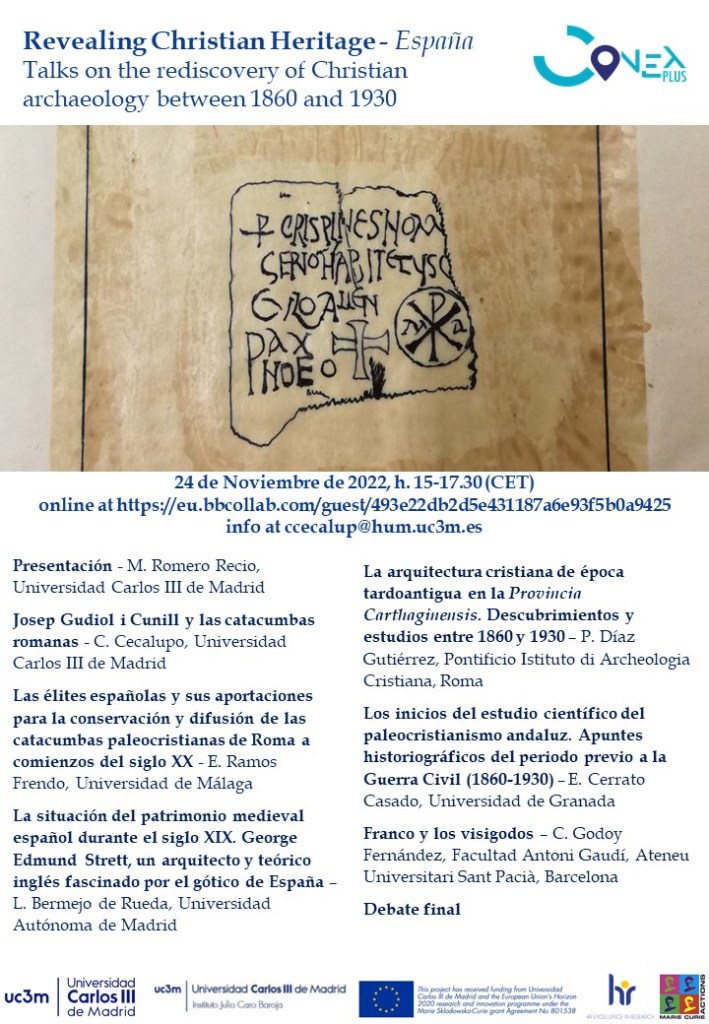
Among the dissemination activities of the Conex-Plus Project LIT!, we will celebrate the second talk of the series “Revealing Christian Heritage – Talks on the rediscovery of Christian archaeology between 1860 and 1930”. This year, the workshop will focus on the rediscovery of Christian antiquity in Spain in late 19th-early 20th century.
The first talk took place in September 2021 (more info here and here) and the publication of the proceedings will be announced soon.
After the summer break, the first two months of this academic year have been devoted to results dissemination. I will dedicate a separete blog post to online or on-person activities (stay tuned!), but first I would like to share the latest publications regarding the LIT! project. All in open access!
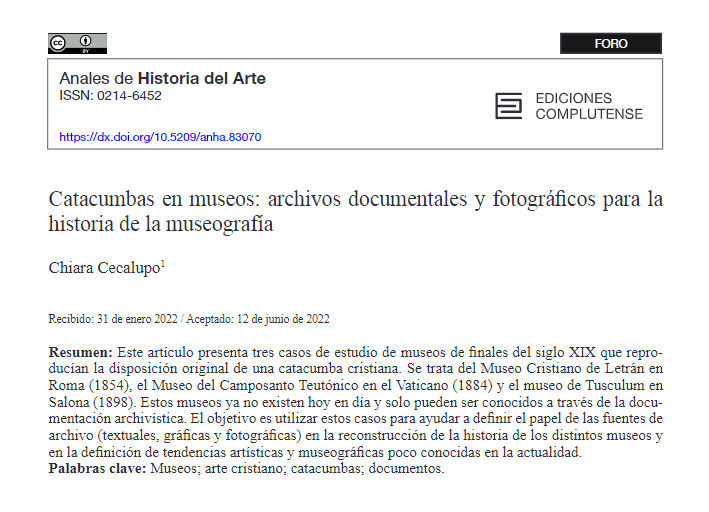
On October the 5th, the volume 32 of the Anales de Historia del Arte came out with the title Arte y Archivo. I contributed with the article “Catacumbas en museos: archivos documentales y fotográficos para la historia de la museografía” (“Catacombs in Museums: Archival Texts and Photos for the History of Museums”).
Bonus: my latest article about German researchers in the early Christian Catacombs of Malta finally saw the light this September. I wrote this article during the first months of the pandemic outbreak and I am very fond of it. It was published in the Römische Quartalschrift Band 117, Heft 1-2.
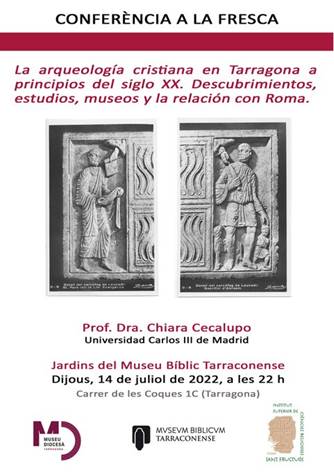
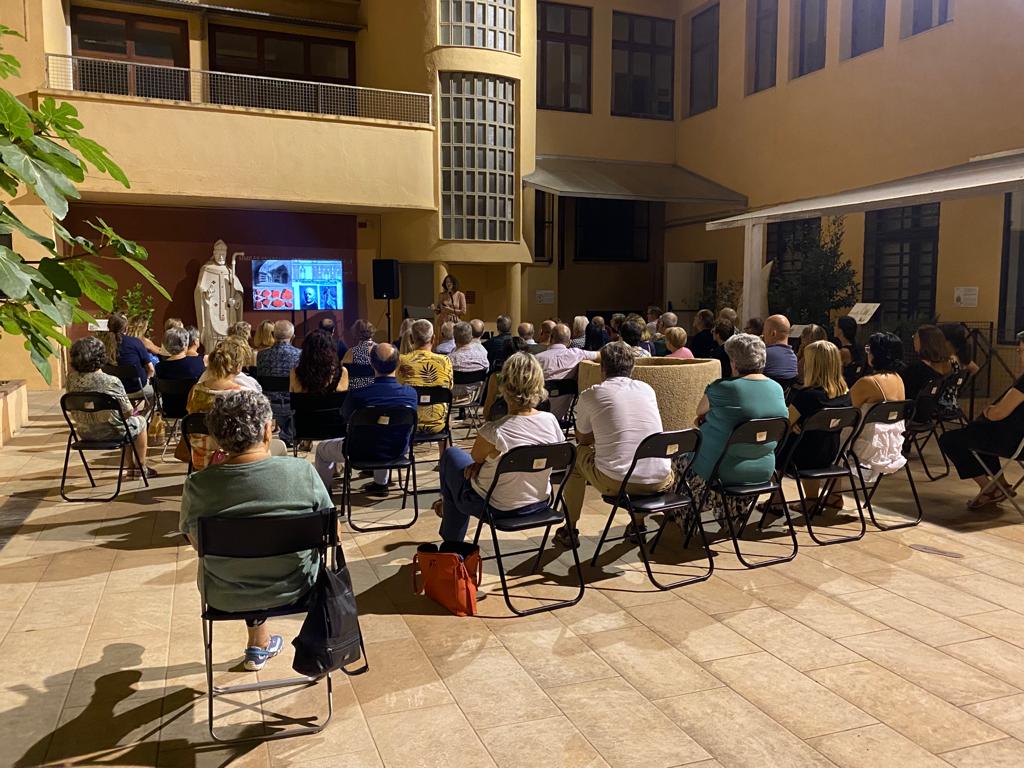
On 14 July, I presented some of the results of my research stay in Tarragona (as Conex-Plus secondment) during the conference “La arqueología cristiana en Tarragona a principios del siglo XX. Descubrimientos, estudios, museos y la relación con Roma” at the Museu Biblìc.
Many people attended this talk on the cultural and museographic relationship between Rome and Tarragona in the early 20th century. Thank you Tarragona for such a heartfelt participation!
In the last issue of the online Journal of Art Historiography (Number 26, June 2022) the is the most recent output of the Project LIT!
The study and dissemination of an iconography: banquet scenes from the catacombs of Rome to the facsimile catacombs of the nineteenth century
In general, the text traces the discovery and the history of two important banquet scenes from the Roman catacombs (from the Catacombs of Callixtus and from the Catacombs of Priscilla). It focuses on the fortune of these scenes in Europe. this fortune developed in their reproductions found in various churches and chapels up to the middle of the 20th century. This overview helps in understanding how the study and reproduction of a single iconography can contribute to a general reconstruction of the development of the discipline of early Christian art history.
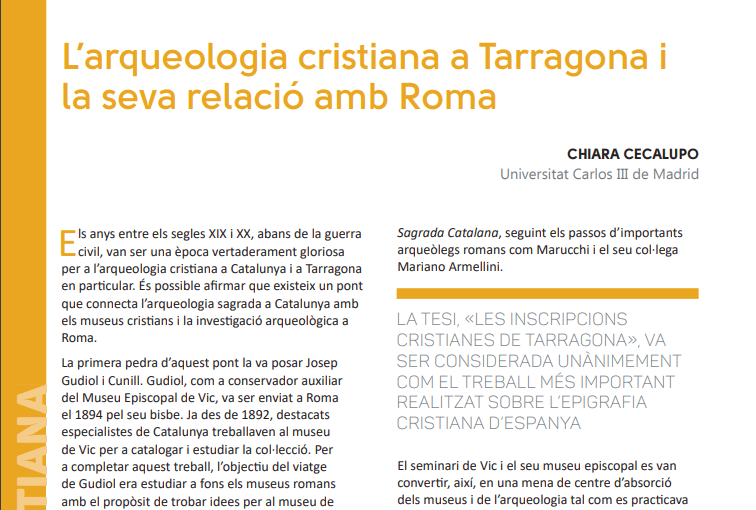
The Catalan city of Tarragona is one of the central places for the history of Christian archaeology in Europe and for the history of museums of Christian antiquities.
The early Christian Necropolis of Tarragona (3rd-5th centuries AD) is one of the most important and extensive necropolis of the Christian ancient world, with more than 2,000 documented burials of many different types. The necropolis stretched around a very important martyr centre, the funerary basilica where the remains of the three most important local martyrs rested: the bishop Fructuosus, and his deacons, Augurius and Eulogius. The three saints were burned alive in the arena of the amphitheatre of Tarraco in the year 259 AD.
Their remains were collected and buried in the outer area on the banks of the River Francolí. There, at the beginning of the 5th century, a basilica dedicated to the memory of the saints was built in the area of their tombs. In this same period, another basilica up northern was built and this area became an important Christian centre until the 7th century.
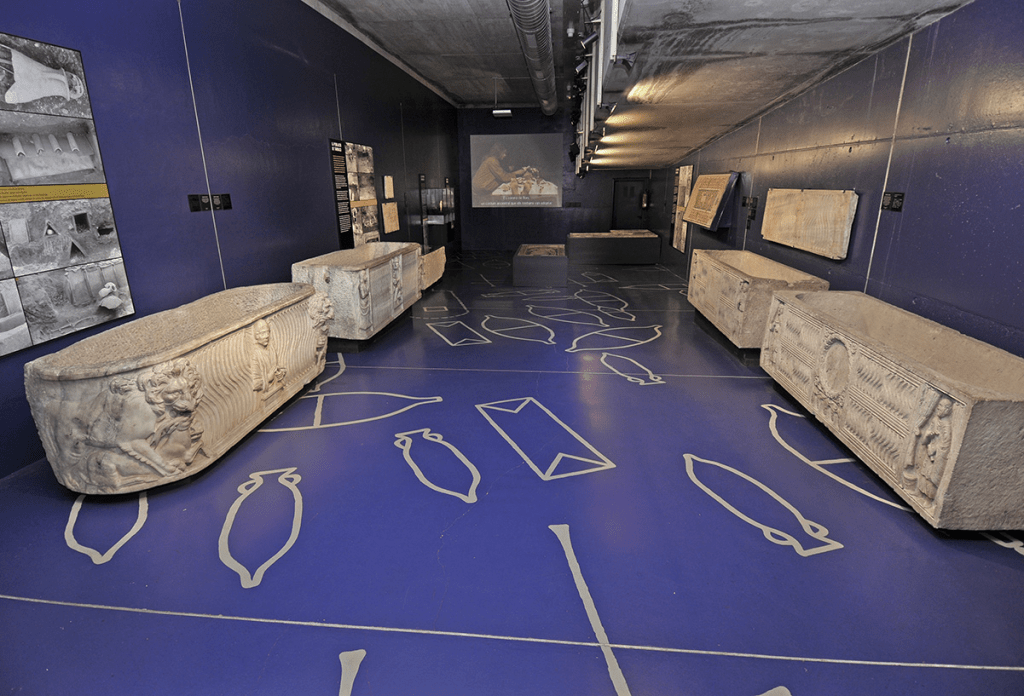
Current exhibition on site of the most important findings
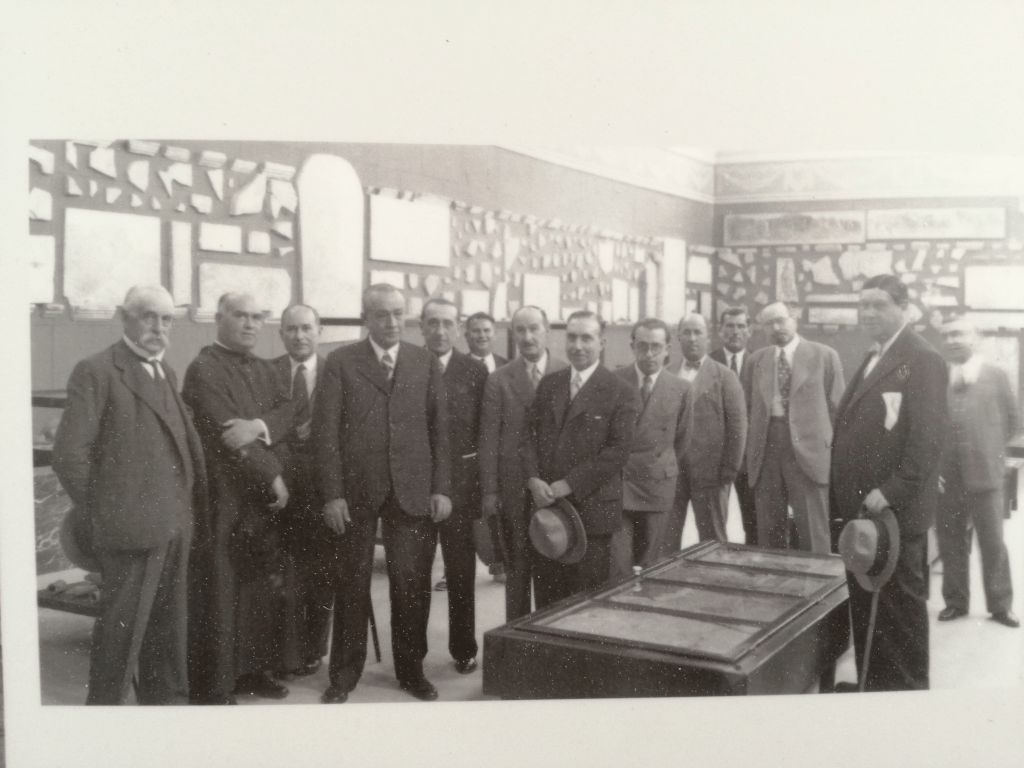
But what interests us the most is the incredible musealisation of the area made in 1929-30. The necropolis was accidentally discovered in 1923, and in 1926 Monsignor Joan Serra i Vilaró took the lead of the excavations. He was an archaeologist who was well known for his documental rigour and for his desire to preserve and disseminate the remains. So in 1930 he opened a museum to explain the Early Christian Necropolis of Tarragona, which is, so far as we know, the first monographic museum in Spain dedicated only to Christian archaeology.
The museum and the necropolis today
We have many old photographs of the museum and it is still preserved, although not open to visitors. It was conseived with features very typical of early 20th century museology. The building, in classical style, had a perimeter corridor where the gracious stone sarcophagi were displayed. The central hall had display cases in the centre and thousands of epigraphs on the walls: this was the most important epigraphic display in the Italian style on the Iberian peninsula. In addition, it was constructed in such a way that the visitable underground hall could serve to preserve parts of the necropolis.
We are going to dig deeper in the history of this incredible museum in the following weeks. Stay tuned!
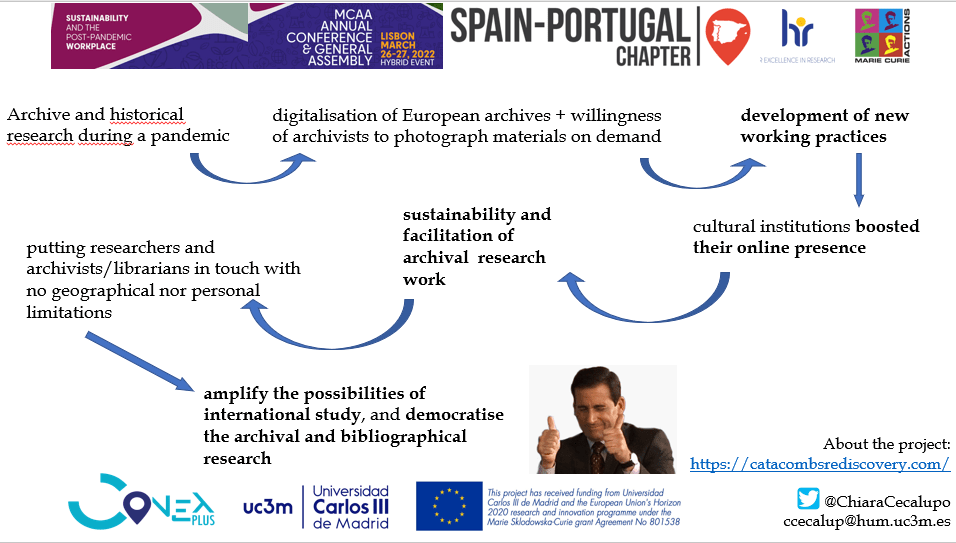
On March 26th, the project LIT! was presented during the online Poster Session 6 (Humanities and SPR) at the 2022 Marie Curie Alumni Association Annual Conference. The conference was held in Lisbon and online in hybrid mode.
This year’s theme was “Sustainability and the post-pandemic workplace”, and my contribution was titeled “Catacombs, facsimile copies and museums between the nineteenth and twentieth centuries: How digital archives and open access amplify the post-pandemic workplace of a historian”.
It was a good occasion to reflect on how the archive and bibliographic work of historians has changed due to the pandemic. I had the possibility to briefly present my poster with a 3-min speech and two slides.
The poster will be shared here in the following days.
It was an inspiring experience, the whole event was truly thought-provoking and it was great to connect with MSCA peers from all over the word!








 Catacombs rediscovery